Key takeaways
- OWB holsters ride outside the waistband on a belt. Learn how they are built, how they differ from IWB, main styles, and what to check before choosing one.
OWB shows up on nearly every holster listing, usually right next to IWB, and the two terms change almost everything about how a handgun carries. Picking between them decides how the gun sits against your body, how much clothing you need over it, and how naturally your hand finds the grip. If you are buying a first holster, or replacing one that digs, prints, or feels slow to draw from, understanding what OWB actually means is the decision that comes before brand, material, or color.
This guide is written for new handgun owners sorting out carry methods, range shooters who want a simpler practice setup, and anyone comparing holster types before spending money. It explains the term in plain language, walks through how an OWB holster is built, and shows where it works well and where it struggles, using the same wording and measurements that appear in maker descriptions. As an Amazon Associate we earn from qualifying purchases.
What OWB Means and How the Holster Is Built
OWB stands for outside the waistband. The holster body rides on the outer side of your trousers, held against the hip by your belt rather than tucked inside the waistband. Most designs sit on the strong-side hip, roughly where a front pocket ends, although cross-draw and small-of-back versions exist. Because the gun sits outside the clothing layer, nothing presses it into your side, and the full grip stays exposed for your hand.
A typical OWB holster has four parts worth knowing. The shell is the pocket that holds the firearm, molded or stitched to match a specific gun, and it should cover the trigger guard completely. The belt attachment is what connects shell to belt: sewn or riveted loops, slots cut into a flat pancake body, a paddle that slips inside the waistband while the shell stays outside, or clips that hook over the belt. Retention describes how the holster holds the gun in place, either through snug friction alone or through an added device such as a thumb release or a rotating hood. Finally, cant is the tilt of the grip, and ride height is how high or low the gun sits relative to the belt line. Those two settings shape both comfort and concealment more than most buyers expect.
How OWB Compares With IWB and Other Positions
An IWB holster rides inside the waistband, between your body and your trousers. That placement hides the gun far better under light clothing, which is why it dominates everyday concealed carry, but it usually needs a waistband with extra room and presses the grip against your skin or undershirt. OWB reverses the trade. The gun is easier to reach, easier to reholster, and more comfortable over a long day, yet the muzzle and grip sit outside your silhouette, so a cover garment has to do more work and the outline shows through thin fabric more readily.
Other positions solve narrower problems. Appendix carry places an inside-the-waistband holster at the front of the body. A shoulder rig spreads weight across the torso and suits long periods seated or driving, but draws across the body. Chest holsters keep the gun clear of a backpack hip belt outdoors. Ankle holsters hide small backup guns and little else. OWB remains the default for range work, training classes, open carry, and property carry because it asks the least of your clothing and gives the most consistent draw and reholster cycle.
A Note on Laws and Safe Handling
Carry law is local. Rules on open carry, concealed carry, permits, and where a firearm may be carried differ by state, and some places restrict one method while allowing the other. A holster choice does not make carry lawful on its own, so check the current rules where you live and where you travel before carrying in any position, and recheck them when laws change. On the handling side, a holster that covers the trigger guard, holds the gun securely during normal movement, and lets you reholster without pointing the muzzle at your own body covers the basics. Store the firearm unloaded and locked away from children and unauthorized users whenever it is off your body.
How to Choose
Start With Retention: How the Gun Stays Put
Retention matters more on an outside-the-waistband holster because the gun sits exposed, where seatbelts, chair arms, door frames, and other people can bump or grab it. Passive retention relies on the shell gripping the trigger guard and frame, which works well for range use and controlled environments. Active retention adds a mechanical lock, such as a thumb-operated release or a hood that must be rotated before the draw, and suits open carry or duty-style use. Whichever style you pick, the holster should hold the unloaded gun in place when you move, bend, and jog in place at home, yet release smoothly when you draw with intent.
Pick a Material That Matches Your Use
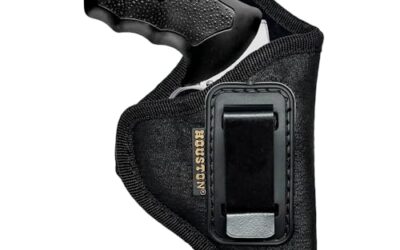
Kydex and similar rigid polymers are molded to one firearm model, keep their shape for a clean reholster, shrug off sweat and rain, and give a consistent draw. Leather starts stiff, softens with use, runs quietly against clothing, and suits pancake styles that pull the gun close, but it needs care and a worn leather holster can lose its grip on the gun. Soft nylon holsters are usually generic rather than model-specific, flex too much around the trigger guard, and collapse when empty, which makes reholstering awkward. Hybrids pair a rigid shell with a flexible backing and land between the two on comfort and structure.
Check the Belt Attachment, Cant, and Ride Height
The attachment decides how firmly the holster stays planted. Belt slots and loops hold closest and move least, paddles go on and off without threading a belt, and clips are quick but can walk along the belt. Match the slot size to your belt width, since a loose pairing lets the holster tilt and shift. Cant is the forward or backward tilt of the grip: a straight drop favors range work, while a forward tilt tucks the grip inward and helps a jacket hide it. A high ride conceals better under short covers but can feel tippy with a heavy gun, while a low ride draws naturally and prints more.
Match the Holster to Your Exact Firearm
OWB shells are shaped around one gun, so the listing’s fit notes matter more than the headline. Confirm the exact model, barrel length, and generation, and check whether the shell accepts a mounted light or laser, since an accessory changes the outline completely and a standard shell will not fit. Note the handedness, because most shells are built for one draw hand only. Revolvers and semi-automatics need different shapes, and a holster molded for a similar-looking model can still leave the trigger guard partly exposed. If your exact configuration is not named in the fit list, keep looking rather than forcing the fit.
Which One Fits Your Situation
You Spend Most Range Days Running Drills
A rigid Kydex holster on the strong-side hip, with passive retention and a straight or slight forward cant, handles repeated draws and one-handed reholstering without fuss. Belt slots keep it from creeping during movement, and the open top means the instructor can see the gun seated. This is the setup most classes assume when they simply say to bring a belt holster.
You Carry Openly Where It Is Lawful
Choose active retention, such as a thumb release or a hood, on a holster that mounts firmly to a stiff belt. The gun is visible and reachable by others, so a locking device and a shell that covers the trigger guard fully both matter. A close-riding design also keeps the grip from snagging on seatbelts, counters, and door frames as you move through the day.
You Want Concealment Under a Jacket in Cool Weather
A high-ride pancake holster in leather or Kydex pulls the gun flat against your side, and a forward cant angles the grip along your torso instead of poking backward. Under a jacket, vest, or untucked overshirt, that combination hides surprisingly well. In warm weather with only a t-shirt, the same setup will print, and an inside-the-waistband design becomes the realistic option.
You Carry Around Home, Land, or a Workshop
A paddle holster earns its place here because it slips on over the waistband when you head outside and comes off just as quickly when you sit down at a desk or table. Retention can stay passive, since the setting is controlled, but the paddle should still grip the belt firmly enough that the holster stays behind when you draw.
Common Mistakes
- Wearing a thin fashion belt that sags and lets the holster flop outward, when a stiff belt made for carrying is what keeps an OWB setup upright and close.
- Buying a generic one-size nylon holster that fits nothing well, covers the trigger guard poorly, and collapses so reholstering means using both hands and looking down.
- Expecting an OWB holster to hide under a light t-shirt the way an IWB holster does, then blaming the holster for printing that the position itself causes.
- Ignoring the fit list and ordering for a similar model, only to find the shell leaves part of the trigger guard exposed or will not accept a mounted light.
- Choosing a cant and ride height from a photo alone, without checking how the grip clears a chair back, a seatbelt buckle, or your own arm when seated.
Frequently Asked Questions
Does OWB Mean the Gun Is Visible to Everyone?
Not necessarily. OWB describes where the holster sits, not whether anyone can see it. A jacket, vest, or untucked shirt can cover an outside-the-waistband holster completely, especially a high-ride pancake style. The outline still tends to show through thin or tight clothing more than with IWB, and whether covered or open carry is lawful where you are is a separate legal question.
Is an OWB Holster More Comfortable Than IWB?
For many people, yes. Nothing sits between the gun and the waistband, trousers do not need extra room, and the grip does not press into your side when you sit or bend. Comfort still depends on the belt, the holster’s shape, and your build, and a heavy gun on a soft belt will feel worse than a light gun carried almost any other way.
Can You Conceal Carry With an OWB Holster?
Yes, with the right combination of holster and clothing. A close-riding pancake design, a forward cant, and a cover garment that falls past the muzzle hide the gun for most daily settings. It works best in cooler weather or with structured outer layers. Where permits, allowed positions, and specific rules differ widely, so confirm the law in your area before relying on any carry method.
What Belt Works Best With an OWB Holster?
A stiff belt built for carrying, matched in width to the holster’s slots or loops, makes the biggest difference. It keeps the holster vertical, stops the grip from leaning away from the body, and spreads the weight so the setup stays comfortable for hours. Ordinary dress belts flex and twist under the load, which makes the gun shift, print more, and feel heavier than it is.