Key takeaways
- Find a robot vacuum for pet hair that handles hard floors, tames daily shedding and empties itself, with five picks compared on suction and mapping.
Pet hair does not behave like ordinary dust. It weaves into carpet fibers, gathers along baseboards, drifts into corners, and reappears within a day of cleaning in any home with a shedding dog or cat. A robot vacuum for pet hair earns its place by running often, so the real buying questions are about suction, brush design, navigation, and how much upkeep the machine itself demands.
Hard floors add a second challenge. A robot that is too aggressive scatters dry food and litter, while one with weak edge cleaning leaves a visible line of hair along every wall. This guide explains what separates a capable pet-hair robot from a generic one, then compares five models with laser mapping, self-emptying options, and brush systems designed to cope with fur.
As an Amazon Associate, we earn from qualifying purchases.
Quick answer
For most pet owners, the best robot vacuum for pet hair pairs strong suction with a brush that resists tangles, laser-based mapping for efficient repeat cleaning, and a self-empty dock that holds weeks of fur. Run it daily on a schedule, keep the filter and brush maintained, and even heavy shedding stays manageable on hard floors and low-pile carpet alike.
Roborock Q5+
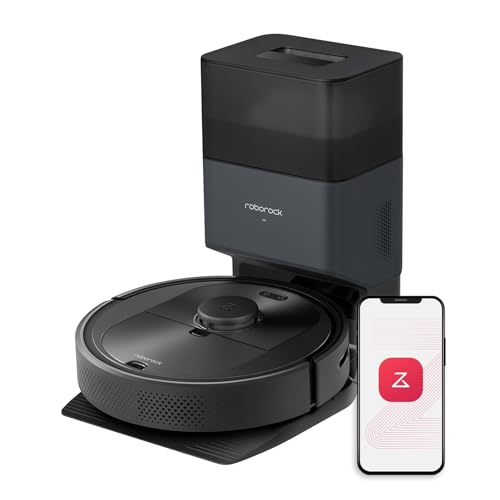
The Roborock Q5+ pairs the Q5 robot with an auto-empty dock that draws debris from the robot bin into a sealed bag in the base, giving up to seven weeks of hands-free emptying according to the manufacturer. For pet homes, that dock matters as much as the robot, because a small onboard bin fills quickly with fur and a full bin quietly kills cleaning performance between runs.
Suction is rated at 2700 pascals, and the robot uses a floating rubber main brush designed to stay close to the floor while resisting the hair wrap that plagues bristled rollers. Navigation comes from a laser system that builds multi-level maps, supports no-go zones and invisible walls in the app, and stores maps for several floors. Runtime is rated up to 180 minutes, enough for large single-level cleaning on one charge.
Buyers should plan for replacement dock bags, and note that this model vacuums only, with no mopping function. Carpet performance suits low and medium pile best. For a household that wants scheduled daily runs with minimal bin duty, the Q5+ is the most complete package in this group, provided the dock has a permanent spot near an outlet.
iRobot Roomba j7
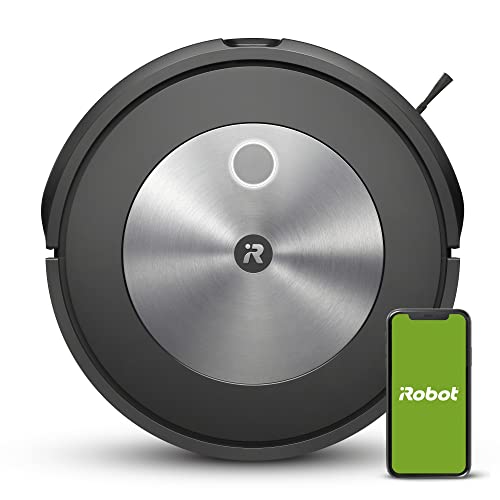
The iRobot Roomba j7, model 7150, is built around obstacle avoidance. Its PrecisionVision navigation is designed to identify and steer around common floor hazards including pet waste, charging cords, and socks, and iRobot backs the pet waste avoidance with a specific replacement promise. For homes where a puppy accident or a dropped toy is a realistic risk, that camera-based awareness is the deciding feature.
Cleaning hardware uses dual multi-surface rubber brushes that flex to maintain contact on hard floors and carpet, an edge-sweeping brush for baseboards, and suction intended for pet hair pickup across floor types. Imprint Smart Mapping lets owners label rooms, set schedules per room, and define keep-out zones and clean zones, and the robot learns routines to suggest schedules around the household pattern.
This listing is the robot only, without the self-empty base, so the onboard bin needs regular manual emptying, which in a heavy-shedding home can mean attention after every few runs. The compatible self-empty base is sold separately for buyers who later want that upgrade. Choose the j7 when obstacle avoidance and mapping maturity matter more than out-of-box hands-free emptying.
Shark AV2501S AI Ultra

The Shark AV2501S AI Ultra takes a different approach to the dock: its self-empty base is bagless, holding up to 30 days of debris in a removable chamber that empties without replacement bags. For pet owners put off by ongoing bag costs, that design removes a recurring purchase while still sparing daily bin duty. The base filtration is HEPA rated, which helps trap dander and fine dust when the chamber is emptied.
The robot itself uses laser navigation with home mapping, row-by-row Matrix Clean coverage that passes over areas in a grid pattern, and a self-cleaning brushroll built to pull in pet hair without the wrapping that stalls ordinary rollers. Voice control through Alexa or Google Assistant and app-based scheduling and room selection round out the controls, and the robot returns to its base to recharge and resume on longer jobs.
Shark does not publish a pascal suction figure for this model, so comparisons rest on cleaning system design rather than a headline number. The bagless chamber also means emptying it releases a small cloud of dust if done carelessly indoors. For buyers who want self-emptying convenience without consumable bags, the AV2501S is the natural shortlist candidate in this guide.
Eufy RoboVac X8

The Eufy RoboVac X8 attacks pet hair with twin-turbine suction, generating 2000 pascals from each of its two motors for strong airflow across the brush bar. That dual-motor layout is intended to keep pickup consistent on hard floors and to pull embedded hair from carpet, and the X8 supports multiple suction levels so quieter maintenance runs are possible in living areas.
Navigation uses iPath laser mapping with AI Map 2.0 technology, storing maps for multiple floors and allowing custom cleaning zones, spot cleaning, and virtual boundaries in the Eufy app. The dustbin is larger than the small bins on earlier RoboVac models, a practical benefit when a single run can collect a surprising volume of fur, and runtime stretches long enough for full apartments and modest houses in one session.
There is no self-empty dock in this package, so the ownership routine includes emptying the bin and cleaning the filter by hand, and there is no mopping function on this version. In exchange, the X8 avoids dock footprint and bag or base costs entirely. It suits pet owners in apartments or smaller homes who prioritize raw suction and laser mapping in a single, dock-free machine.
Dreame D10 Plus

The Dreame D10 Plus combines vacuuming and mopping with a self-empty base rated to hold up to 45 days of debris, placing it among the longest-interval docks in this guide. Suction is rated at 4000 pascals, the strongest figure here, delivered through a floating rubber brush designed to limit hair tangling, and the base empties the robot automatically after each run.
Laser navigation builds multi-floor maps, the robot detects carpet and adjusts behavior for it, and the mopping function uses a water tank and pad for light hard-floor maintenance between deeper manual mops. App control, Alexa compatibility, and scheduled room-by-room cleaning are all included, and the long rated runtime supports larger floor plans without mid-job recharging on most layouts.
Buyers should treat the mop as a maintenance tool rather than a scrubbing replacement, and budget for replacement base bags and mop pads. The dock also needs floor space and a nearby outlet. For larger pet homes wanting the longest emptying interval plus basic mopping, the D10 Plus is the broadest feature set here.
How to choose
Begin with the brush. Rubber and self-cleaning brushrolls resist hair wrap far better than traditional bristled rollers, and less time spent cutting fur off a roller is the single biggest quality-of-life difference in a pet home. Next, weigh suction figures alongside airflow design, and remember that a robot running daily at moderate suction beats a stronger robot that runs weekly, because pet hair is a volume problem that rewards frequency.
Then decide on emptying. Self-empty docks from Roborock, Shark, and Dreame trade floor space and, in most cases, bag costs for weeks of freedom from bin duty, while dock-free models like the Roomba j7 in this listing and the Eufy X8 keep the purchase simpler and the footprint smaller. Mapping quality matters in cluttered homes: laser navigation gives faster, straighter, repeatable coverage and reliable room targeting, while camera-based systems add obstacle recognition that can prevent a mess from being spread across a room.
Finally, match the robot to the floors. Hard floors reward good edge cleaning and controlled scatter around bowls and litter areas, while low-pile carpet rewards strong suction and carpet detection. Check threshold heights, confirm replacement filters and brushes are easy to source, and plan a brief weekly routine of emptying, tapping out the filter, and clearing the brush ends.
Who should skip
Households with thick, high-pile carpet throughout should skip robot vacuums as the primary cleaner, since most models struggle to deep-clean dense pile and can bog down on fringe and tassels. A conventional upright remains the right main tool there, with a robot handling hard-floor areas only. Homes with many floor-level obstacles that cannot be tidied, from loose cables to feeding stations on the floor, will also frustrate any robot without obstacle avoidance.
Buyers who know they will not maintain the machine should skip the category honestly: filters clog with dander, brushes collect hair at the axles, and a neglected robot quietly stops cleaning well. Anyone needing true mopping for sticky kitchen messes should skip vacuum-only models and look at dedicated mopping systems instead. And if the home has no practical dock location with outlet access, the self-empty models lose much of their advantage, making a simpler dock-free robot the smarter purchase.
FAQ
How often should a robot vacuum run in a home with pets?
Daily scheduled runs are the practical standard for shedding pets, because hair accumulates continuously and a robot prevents buildup far better than it rescues neglected floors. Homes with several animals or heavy seasonal shedding may benefit from twice-daily runs in the rooms pets use most. Shorter, frequent sessions also keep the bin and filter from packing solid with fur between cleanings.
Do self-empty docks really help with pet hair?
Yes, because pet hair fills a small robot bin faster than ordinary dust, and a full bin sharply reduces pickup long before owners notice. A dock that empties the robot after each run keeps suction consistent and stretches manual attention to weeks instead of days. The trade-offs are floor space, dock noise during the brief emptying cycle, and replacement bags on most systems.
Can a robot vacuum replace a regular vacuum for pet hair?
For hard floors and low-pile carpet, a well-chosen robot running daily can handle the great majority of routine pet hair, leaving the upright for stairs, upholstery, car interiors, and occasional deep cleans. Thick carpet, pet beds, and furniture still need conventional tools. Most pet homes end up using both, with the robot carrying the daily load and the upright appearing far less often.
What maintenance does a pet-hair robot vacuum need?
Expect to empty the bin or check the dock on schedule, tap or rinse the filter as the maker directs, remove hair from brush ends and wheels weekly, and wipe sensors so navigation stays accurate. Filters, brushes, and dock bags are consumables with replacement intervals in each manual. In a shedding household, doubling the suggested brush-check frequency prevents most performance complaints.
Final verdict
The right robot vacuum for pet hair is the one that runs every day without demanding attention, and each model here clears that bar differently. The Roborock Q5+ is the most balanced hands-off choice, the Roomba j7 leads on obstacle avoidance for accident-prone homes, the Shark AV2501S removes bag costs from self-emptying, the Eufy X8 delivers twin-turbine suction without a dock, and the Dreame D10 Plus stretches emptying intervals furthest while adding light mopping. Match the dock style, brush design, and navigation to the floors and the animals, set a daily schedule, and pet hair becomes background upkeep instead of a daily chore.