Key takeaways
- Find the best pipe wrenches for home plumbing repairs, from compact 10-inch models to heavy-duty 24-inch wrenches, with clear size and grip guidance.
A dripping trap, a stuck supply valve, or a shower arm that will not budge can turn a small plumbing job into a long afternoon. The right pipe wrench changes that. It grips round pipe and threaded fittings with hardened teeth, holds fast under turning force, and lets a homeowner apply steady leverage without rounding the fitting. A pair of slip-joint pliers cannot do the same work, and an adjustable wrench often slips on round surfaces where a pipe wrench bites and holds.
Pipe wrenches come in several lengths, materials, and jaw designs, and the best choice depends on pipe size, the space around the fitting, and how often the tool will be used. A compact 10-inch wrench fits under a sink. A 14-inch or 18-inch wrench covers most household supply and drain work. A 24-inch wrench handles larger main lines and stubborn outdoor fittings. Aluminum models weigh less for overhead work, while cast iron and alloy steel models offer a solid feel for high-torque jobs.
This guide covers five pipe wrenches sold on Amazon that suit home plumbing repairs, with size, capacity, construction, and the jobs each one handles best.
As an Amazon Associate, we earn from qualifying purchases.
Quick answer
For most home plumbing repairs, a 14-inch aluminum pipe wrench is the best starting point because it grips pipe up to two inches in diameter, stays light enough for overhead work, and reaches into tight spaces. Add a compact 10-inch wrench for under-sink fittings and a longer 18-inch or 24-inch wrench for main lines and stubborn outdoor connections.
RIDGID Model 814 Aluminum Straight Pipe Wrench, 14-Inch

The RIDGID Model 814 is a 14-inch aluminum straight pipe wrench with a two-inch pipe capacity, and it is the most versatile single wrench in this guide for home plumbing. Its aluminum I-beam handle keeps the weight down to about two and a half pounds. The full-floating forged alloy steel hook jaw provides a firm bite and quick ratcheting action.
Self-cleaning threads help the adjustment nut keep moving smoothly, even after exposure to water, dust, and grime in a basement or crawl space. The hook jaw, heel jaw, and spring assembly are replaceable, which extends the life of the tool when the teeth eventually wear.
The 14-inch length gives enough leverage for supply lines, traps, shower arms, and outdoor hose bibbs, while still fitting into many cabinets and wall cavities. It handles copper, galvanized steel, and iron pipe, plus threaded fittings on water heaters and main shutoff valves. For a first pipe wrench, the Model 814 covers the widest range of everyday plumbing jobs with the least fatigue.
RIDGID Model 818 Aluminum Straight Pipe Wrench, 18-Inch

The RIDGID Model 818 steps up to 18 inches in length with a two-and-a-half-inch pipe capacity, making it the right choice when a 14-inch wrench runs out of leverage. Its aluminum construction follows the same pattern as the Model 814, with an I-beam handle, a full-floating forged hook jaw, and self-cleaning threads.
At about three and three-quarter pounds, the Model 818 remains manageable for most adults, and the aluminum body keeps it lighter than a cast iron wrench of the same length. That balance of reach and weight suits work on water heater connections, main supply lines, larger drain fittings, and outdoor plumbing where leverage matters more than compact size.
The replaceable jaw and spring assembly carries over from the smaller model, so worn teeth do not mean a new wrench. Homeowners who already own a compact wrench will find the Model 818 a logical second wrench, and those who face larger pipework from the start may prefer it as the main tool in the kit.
RIDGID Model 24 Heavy-Duty Straight Pipe Wrench, 24-Inch
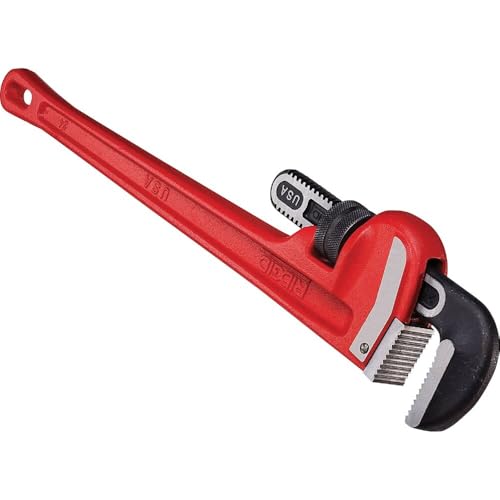
The RIDGID Model 24 is a 24-inch heavy-duty straight pipe wrench with a three-inch pipe capacity, built for the largest and most stubborn jobs in a home. Its ductile iron housing and I-beam handle give it a solid feel, and the full-floating forged hook jaw grips large-diameter pipe with confidence. The wrench weighs about nine and a half pounds.
Self-cleaning threads and a nonstick adjustment nut help the jaw move freely even after years in a damp basement or garage. The hook jaw, heel jaw, and spring assembly are replaceable, which supports long service life.
This is the wrench to reach for when a smaller tool slips or flexes, when a main shutoff valve has not turned in a decade, or when a large drain or supply line needs real torque. It is too long and heavy for under-sink work, and it can damage small fittings if used without care, so it belongs in the kit as the heavy option rather than the everyday tool.
Performance Tool W1133-10B Heavy-Duty Pipe Wrench, 10-Inch

The Performance Tool W1133-10B is a compact 10-inch pipe wrench that earns its place in a home toolkit by fitting where longer wrenches cannot. Its drop-forged steel jaws are precision milled for a firm grip, and the jaw opens to about one and five-eighths inches, which covers common supply lines, traps, and small threaded fittings. The heavy-duty enamel finish helps resist corrosion in damp spaces under sinks and in basements.
A thumbwheel adjustment sets the jaw width quickly, and the 10-inch handle gives enough leverage for most small fittings. At about one and a quarter pounds, the wrench is easy to carry and easy to hold overhead. Its short length also helps in crowded vanity cabinets and behind toilets.
This wrench suits homeowners who want a first tool for small repairs, renters who need a compact option for basic fixes, and anyone who already owns a larger wrench and needs a smaller partner for tight spots. It will not handle large main lines or heavily seized outdoor fittings. For traps, supply stops, faucet connections, and small drain work, the W1133-10B is a practical choice.
Amazon Basics Heavy-Duty Straight Pipe Wrench, 10-Inch

The Amazon Basics Heavy-Duty Straight Pipe Wrench in 10 inches is a straightforward option for homeowners who want a simple, sturdy tool for common repairs. Its alloy steel construction gives it a solid feel, and the corrosion-resistant finish helps it stand up to water and humidity. The C-shaped head follows the classic Stillson pattern.
At about 10.43 inches long and about one and a half pounds, the wrench fits easily in a drawer, a tool bag, or a small toolbox. It handles supply lines, traps, faucet fittings, and small threaded connections with a secure grip, and its compact size makes it easy to control in tight spaces. The adjustment nut moves the hook jaw to fit different pipe diameters, and the hardened teeth bite into metal pipe and fittings without slipping when the wrench is seated correctly.
This model is a good match for first-time homeowners, for a basic repair kit, and for anyone who wants a backup wrench to keep near the water heater or under the kitchen sink. It is not intended for large-diameter pipe or for heavily corroded main lines, where a longer wrench provides more leverage.
How to choose
Start with pipe size. Measure the outside diameter of the pipe or fitting, then choose a wrench whose jaw capacity covers it with room to spare. A 10-inch wrench suits pipe up to about one and a half inches. A 14-inch wrench covers pipe up to two inches. An 18-inch wrench reaches two and a half inches, and a 24-inch wrench handles pipe up to three inches. Buying a wrench that is too small leads to slipping, while one that is too large can damage small fittings and will not fit in tight spaces.
Consider length and leverage next. Longer handles give more turning force, which helps with seized fittings, but they also need more swing room. In a vanity cabinet or behind a toilet, a 10-inch or 14-inch wrench is far more useful than a 24-inch model.
Material affects weight and feel. Aluminum wrenches weigh less and reduce fatigue during overhead or extended work. Cast iron and alloy steel wrenches feel denser and suit high-torque jobs, though they tire the arm faster. Look for drop-forged jaws, self-cleaning threads, and replaceable jaw assemblies, since those features extend tool life.
Who should skip
Homeowners who only need to tighten a chrome faucet nut, a plastic drain trap, or a polished fixture should skip a toothed pipe wrench for that job. The hardened teeth can scratch chrome, brass, and plastic, and they can crack a plastic fitting. A strap wrench or a basin wrench is a safer choice for finished surfaces.
Anyone with very limited hand strength or a wrist injury should also think carefully before choosing a long, heavy wrench. A 24-inch cast iron model demands real effort to lift and control. A lighter aluminum wrench in 10 or 14 inches is a better fit in that case.
Finally, a pipe wrench is not a substitute for a plumber on a major job. If a main line is leaking, a sewer connection is damaged, or a fitting breaks off inside a wall, shutting off the water and calling a licensed plumber is the safer path.
FAQ
What size pipe wrench do most homeowners need first?
A 14-inch pipe wrench is the best first choice for most homes because it grips pipe up to two inches in diameter and gives enough leverage for supply lines, traps, and shower fittings.
Can a pipe wrench be used on plastic pipe?
A toothed pipe wrench can damage plastic pipe and fittings, so it should be used with great care or avoided on plastic. The teeth can score the surface and crack the fitting under torque. A strap wrench or a wrench designed for plastic is a safer option for PVC and similar materials.
How do I keep a pipe wrench from slipping?
Seat the hook jaw squarely on the pipe, adjust the nut so the jaw grips with a small amount of play, and pull the handle so the teeth bite deeper as force increases. Clean dirt and grease from the pipe first.
Should I buy aluminum or cast iron?
Aluminum suits most home repairs because it is lighter and easier to hold overhead, while still offering strong grip through forged steel jaws. Cast iron suits heavy, seized fittings where maximum heft and torque matter. Many homeowners own one of each: aluminum for everyday work and cast iron for the toughest jobs.
Final verdict
The RIDGID Model 814 in 14 inches is the best single pipe wrench for home plumbing repairs, thanks to its two-inch capacity, light aluminum handle, and replaceable jaws. Pair it with a 10-inch wrench for tight under-sink work, and add the RIDGID Model 818 or Model 24 when larger pipe and seized fittings call for more leverage. Choose the size that matches the pipe and seat the jaw squarely.