We independently review everything we recommend. When you buy through our links, we may earn a commission. As an Amazon Associate we earn from qualifying purchases.
5 Best Crossbow Broadheads for Elk (November 2026)
Five crossbow broadheads built for elk, from a 150 grain fixed head to a wide mechanical, compared by grain weight, cutting diameter and pack count.
Five crossbow broadheads built for elk, from a 150 grain fixed head to a wide mechanical, compared by grain weight, cutting diameter and pack count.
Elk change the broadhead decision in ways a deer hunt never does. A mature bull carries heavy shoulder bone, thick hide and a deep chest, so a head that sails through a whitetail can stop short on a quartering elk. The real choice is between penetration and cutting width: heavier fixed blades drive deeper and hold together on bone, while wide mechanicals cut a bigger channel but spend energy opening. Getting that balance right matters more than any single feature printed on the pack.
This roundup suits crossbow hunters who want elk-weight heads rather than general deer picks. Every head below weighs 125 grains or more, and each one was chosen from its Amazon listing name and printed specs: a 150 grain fixed head built for heavy bone, a one-piece steel head with no parts to lose, a crossbow-specific fixed head with offset blades, a wide rear-deploying mechanical, and a five-pack fixed head for hunters who practice a lot.
Quick Picks
As an Amazon Associate we earn from qualifying purchases.
Product
Best for
Key spec from title
Excalibur Boltcutter 150 Grain, 3-Pack
Heavy fixed head for deep penetration
150 grain weight
G5 Montec 125 Grain, 3-Pack
One-piece steel simplicity
1-1/8 inch cut
Muzzy Trocar Crossbow 125 Grain, 3-Pack
Crossbow-specific fixed blade
1-3/16 inch cut
Rage Crossbow X 125 Grain, 3-Pack
Widest cut in the set
2 inch cut
NAP Thunderhead 125, 5-Pack
Practice-heavy hunters
5 heads per pack
How to Choose
Grain Weight and Front-of-Center Balance
Head weight shapes how a bolt flies and how hard it hits. A 125 or 150 grain head adds front-of-center balance, which steadies a short crossbow bolt in flight and keeps more momentum downrange. That momentum is what carries a head through an elk shoulder or rib on a less than perfect angle. Match the head weight to the bolt weight your crossbow maker recommends, and keep total bolt weight consistent across every arrow in the quiver, since mixing weights shifts the point of impact.
Fixed Blade or Mechanical for Elk
Fixed blades cut on contact, have no moving parts and keep working after meeting bone, which is why many elk hunters trust them. Mechanicals fly closer to field points and open a wider cut, but the blades spend some of the bolt’s energy as they deploy, and a hard quartering hit can deflect them. With a fast, high-energy crossbow the trade can be worth it. With a slower setup, a fixed head protects penetration, and penetration is the thing elk hunting runs out of first.
Cutting Diameter Versus Penetration
A wide cut sounds better until it meets an elk rib. Each extra fraction of cutting diameter adds drag inside the animal, so the bolt slows sooner. Narrow fixed heads in the 1-1/16 to 1-3/16 inch range push deeper with the same energy, while a 2 inch mechanical needs energy to spare. Think about your likely shot: broadside at moderate range favors width, while steep angles, longer shots and heavy bone favor a narrower head that reaches the far side of the chest.
Ferrule Strength and Blade Retention
On elk, the ferrule takes the punishment. A solid steel ferrule survives bone contact that can bend or snap a light alloy body, and it keeps the blades aligned for the rest of the pass. Check how blades are held: locked, screwed or retained by a collar. Loose blades cost accuracy before the shot and cutting edges after it. Replaceable blades are a plus after practice sessions, but only when the locking system keeps them tight under crossbow launch forces.
The 5 Best Options
Excalibur Boltcutter 150 Grain Broadheads, 3-Pack
Top Pick
Excalibur Boltcutter 150 Grain Broadheads, 3-Pack
Best for: Hunters who want the deepest penetration from a heavy fixed head.
This is the heavy end of the set, and it suits hunters who put penetration ahead of everything else. The 150 grain weight loads the front of the bolt, steadies flight from fast crossbows and keeps momentum up when the head meets hide and bone. Three fixed stainless blades cut on contact with no deployment step to go wrong, and the center locking system lets you swap blades while the head stays on the bolt. For a bull at a hard angle, this is the head built to keep driving.
Watch out for: The heads arrive unassembled, so blades must be fitted and locked before use; the narrow cut also leaves a smaller channel than wider heads.
G5 Montec 125 Grain Broadheads, 3-Pack
Runner-Up
G5 Montec 125 Grain Broadheads, 3-Pack
Best for: Hunters who want a simple, solid head with no parts to lose.
The Montec takes the opposite route to strength: the whole head is one piece of steel, with no ferrule joint, no loose blades and nothing to rattle or shift in the quiver. That one-piece build suits elk hunters who want a head they can inspect at a glance and trust after a knock against rock or bone. The 125 grain weight keeps bolt speed up better than the heaviest heads, and the cut-on-contact tip begins cutting at first touch. Edges can be honed again on a flat stone after practice.
Watch out for: A bent or chipped head cannot be rebuilt with fresh blades, since the blades are part of the body; carry a spare pack.
Muzzy builds this Trocar version for crossbows rather than adapting a vertical-bow head, and the offset blade layout is the detail that matters. Offsetting the three blades adds spin as the head passes through, which helps keep the wound channel open. The solid stainless ferrule and chisel tip are made for bone contact, and the 1-3/16 inch cut is the widest among the fixed heads in this set. It fits hunters who want a fixed blade with a little more cutting width than the narrowest options give.
Watch out for: Replacement blades are sold separately, so a damaged head needs a blade kit on hand to return to service.
Rage Crossbow X 125 Grain Broadheads, 3-Pack
Rage Crossbow X 125 Grain Broadheads, 3-Pack
Best for: Hunters with a fast crossbow who want the widest cut available here.
This is the mechanical of the set, built for crossbows with a rear-deploying two-blade layout that opens to a full 2 inch cut. It suits hunters whose crossbow has energy to spare and who mostly expect broadside or lightly angled shots, where the wide entry and exit holes help with tracking. The Shock Collar holds the blades closed in the quiver and during the shot, then lets them sweep back on impact. Ferrule alignment technology is meant to keep the head flying true at crossbow speeds.
Watch out for: Shock Collars are spent once a head is fired, so carry spares; on hard quartering hits a mechanical gives up penetration a fixed head keeps.
NAP Thunderhead 125 Broadheads, 5-Pack
NAP Thunderhead 125 Broadheads, 5-Pack
Best for: Hunters who practice with their hunting heads and want spares in camp.
The Thunderhead is the long-running fixed blade in this group, and the five-head pack is its practical edge: more heads for practice, tuning and spares on a long trip. Three Diamize blades sit on a micro-grooved ferrule, a layout meant to keep flight stable from quick crossbows. At 125 grains it matches the middle of this set for weight, and the 1-3/16 inch cut equals the Trocar. Hunters who shoot their hunting heads before the season, rather than trusting a practice stand-in, get the most from this pack.
Watch out for: The small blade parts take care during assembly and blade changes; keep a broadhead wrench in the kit.
Which One Fits Your Situation
Hunting From a Ground Blind at Close Range
Close shots from a blind usually come broadside, and range is known rather than guessed. The Rage Crossbow X earns its place here: with plenty of energy at short range, its 2 inch cut opens fully and leaves wide holes that help when an elk slips into thick cover after the shot. Keep a fixed head on a second bolt if a steep angle is the only chance offered.
Spot-and-Stalk Hunts in Open Country
Stalking elk in open country means longer shots and animals that rarely stand perfectly square. Penetration margin matters more than cut width. The Boltcutter, at 150 grains, carries momentum to the far side of the chest, and the Montec gives the same fixed-blade security in a lighter, one-piece package. Both hold together if the shot clips the edge of the shoulder on the way in.
Shooting a High-Speed Crossbow
Fast crossbows punish sloppy heads: blades can open early, and wide fixed blades can steer the bolt. The Trocar Crossbow was built for this use, and the Thunderhead’s micro-grooved ferrule is also shaped with quick flight in mind. Whichever head you pick, shoot that exact head before the hunt, since field points will not warn you about planing at speed.
Building a Heavy Bolt Setup
Some hunters build the whole bolt around weight: heavy inserts, a heavy head and a total package that trades speed for momentum. The Boltcutter is the natural top end at 150 grains, while the three 125 grain fixed heads let you add insert weight instead and still keep a steel head up front. Keep every bolt in the quiver at the same total weight.
Common Mistakes
Choosing a wide mechanical for a slow crossbow, then losing penetration on a quartering bull that a fixed head would have reached.
Mixing 100 grain and 125 grain heads in one quiver, which shifts impact points between bolts without any visible sign.
Skipping broadhead practice and trusting field-point groups, even though fixed blades can plane at crossbow speeds.
Reusing a head after it hits bone or rock without checking the ferrule and blade edges for bends and chips.
Forgetting spare collars, blades or a broadhead wrench in camp, turning a simple fix into a lost hunting day.
Frequently Asked Questions
How heavy should a crossbow broadhead be for elk?
Most elk hunters land between 125 and 150 grains. The extra weight adds front-of-center balance and momentum, which help a short bolt fly steadily and drive deeper on heavy animals. Match the head to the total bolt weight your crossbow maker recommends, and keep every hunting bolt at the same weight so the point of impact stays put.
Are mechanical broadheads a sound choice for elk?
They can be, from a fast crossbow with energy to spare and on broadside shots. The wide cut helps tracking, but opening the blades costs penetration, and hard angles raise the chance of deflection. Many elk hunters carry a fixed head as the first choice and keep a mechanical for close, square shots. Knowing your setup’s limits decides it.
How many broadheads should I carry on an elk hunt?
A three-pack covers a short hunt, but backcountry trips argue for more. One head can be lost, dulled on a miss into rocky ground or damaged on bone. A five-pack, or a three-pack plus replacement blades and spare collars, keeps you hunting after a bad outcome. Bring the small wrench your heads need as well.
Do I need to practice with the actual broadheads?
Yes. Fixed blades can steer a fast bolt, and mechanicals need their retention checked, so field-point practice alone is not enough. Shoot each hunting head at the ranges you expect, confirm the impact point, then fit fresh blades or a fresh head for the hunt itself. A target made for broadheads saves edges and bolts.
K
Kissmyaster Editorial Team
We compare specs, materials and verified owner reviews before a product earns a spot. Rankings are never paid.
Affiliate disclosure. As an Amazon Associate we earn from qualifying purchases at no extra cost to you. Prices accurate as of the date shown.
OWB holsters ride outside the waistband on a belt. Learn how they are built, how they differ from IWB, main styles, and what to check before choosing one.
Four IWB holsters whose listings name the Kimber K6s, in steerhide, crazy horse leather and clipless synthetics, with fit notes for each barrel length.


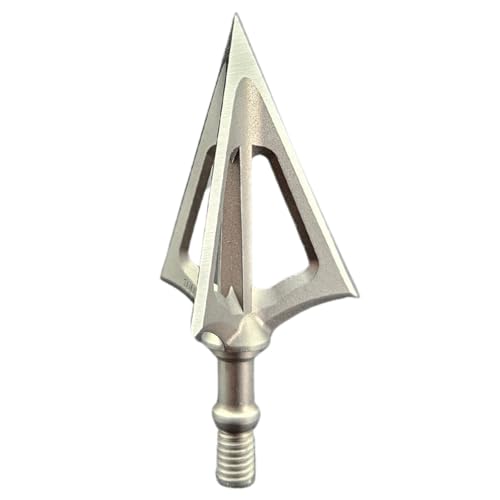

 Rage Crossbow X 125 Grain Broadheads, 3-Pack
 NAP Thunderhead 125 Broadheads, 5-Pack