We independently review everything we recommend. When you buy through our links, we may earn a commission. As an Amazon Associate we earn from qualifying purchases.
5 Best Expandable Broadheads for Deer (November 2026)
Five expandable broadheads for deer compared on cut diameter, blade retention and grain weight, with specs taken from each head's own Amazon listing.
Five expandable broadheads for deer compared on cut diameter, blade retention and grain weight, with specs taken from each head's own Amazon listing.
Picking an expandable broadhead for deer is really a decision about timing: when should the blades open, and how much arrow energy are you willing to spend opening them. Heads that deploy at the hide start cutting immediately but give up some penetration on angled hits, while two-stage designs slip through the surface closed and open inside, saving momentum for the far side. Retention is the other half of the choice, because collars, bands and locking tabs each fail in different ways when a head rides in a quiver all season.
OUR TOP PICK
Swhacker #261 Levi Morgan Series 2-Blade Broadhead
This guide is written for compound bow hunters after whitetail and mule deer, whether they shoot a 100-grain setup from a treestand or run a heavier arrow built for pass-throughs at longer range. The five heads below were chosen from their Amazon listings, and every number quoted comes from the listing for that head: grain weight, blade count and thickness, cutting diameter, ferrule material and the retention system that keeps the blades shut in flight.
Quick Picks
As an Amazon Associate we earn from qualifying purchases
Product
Best for
Key spec from title
Swhacker #261 Levi Morgan
Practicing with the head you hunt with
100 grain, 2 blades, 2 in cut
Rage Hypodermic NC
Skipping collars and O-rings entirely
100 grain, 2 blades, 2 in cut
G5 Deadmeat V2
All-steel durability on imperfect hits
100 grain, 3 blades, 1.5 in cut
G5 Megameat 125
Heavy arrows and high-momentum bows
125 grain, 3 blades, 2 in cut
Rage Chisel Tip
Starting the hole through hide and rib
100 grain, 2 blades, 2 in cut
How to Choose
Where the blades open changes the wound
Deployment timing decides what your arrow energy gets spent on. A head that opens the instant it touches hide cuts a full-width entry hole, which helps blood reach the ground early, but those open blades act like a parachute on quartering shots and can rob the arrow of the push it needs to exit. Two-stage designs work differently: small wing blades slice the surface while the main blades stay folded, then open once inside the body cavity. That keeps more momentum for ribs on the far side, at the cost of a smaller entry hole. Match the design to your usual shot angle, not to the widest number on the box.
Retention systems and the upkeep they demand
Every expandable needs something holding its blades shut against launch forces, and each system shifts the burden onto you differently. Polymer collars grip the blade bases and crack or tear on the shot, so they are consumables you replace and must seat perfectly before every hunt. Rubber bands are simple but age, dry out and need to match your bow speed. Tab-based systems build the lock into the pivot, removing spares from your pack while making the tabs themselves the wear point to inspect. A locking practice mode is a fourth approach, pinning blades shut for target work. None is maintenance-free; pick the routine you will actually follow.
Grain weight, momentum and the far-side hole
Point weight changes how an expandable behaves after impact more than it changes flight at deer ranges. A 125-grain head raises front-of-center and total arrow mass, which helps a heavy build carry momentum through shoulder muscle and rib, and it suits long-draw or high-poundage setups that generate energy to spare. A 100-grain head keeps speed up on mid-weight bows, where a two-inch cut already asks a lot of the setup. What matters most is the exit hole: from a treestand, a pass-through leaves a low exit that drains blood onto the trail, while a head that stops inside leaves only the higher entry to leak.
Ferrule material and tip shape on bone
The ferrule is the spine of the head, and it is what survives when a shot lands wrong. Machined stainless steel ferrules shrug off rib and scapula contact that can bend a lighter anodized aluminum body, which is why the all-steel heads here tolerate imperfect hits better. Tip shape sets the first moment of the shot: a chisel tip is built to punch through hide and bone before the blades arrive, while a needle-style hybrid tip starts a smaller hole and leans on the blades for the damage. After any hit, spin the head on the shaft; a wobble means the ferrule bent and the head should be retired.
Hunters who want to practice with the exact head they hunt with.
Watch out for
The wing blades ride exposed in flight, so inspect them for bends after target sessions, and fit the band set that matches your bow speed before the season opens.
Most expandables ask you to trust that they fly like your field points; this one lets you confirm it. The #261 carries small wing blades that cut the hide on entry while the main blades stay folded, then deploy inside the body to the full two-inch cut, so less energy is spent at the surface. Its blade lock pins the blades shut, turning the exact head you hunt with into a practice head. The arched blade shape is meant to reduce resistance after entry and hold momentum. It suits treestand and field-edge hunters shooting standard 100-grain builds who practice often and want that practice to mean something.
The NC in the name is the whole point: no collar. Finger-like tabs at the blades’ pivot point hold the swept-back blades shut in flight, so there are no shock collars to crack in the cold and no O-rings to roll off in the quiver. On impact the blades slide back on the SlipCam pivot and open to a full two-inch cut behind a hybrid tip on a one-piece machined stainless ferrule. It fits hunters who have lost shots to fiddly retention parts before and want a two-inch, two-blade head that asks for nothing but a quick tab check before it goes in the quiver.
Hunters whose shots often land at an angle or clip bone on entry.
Watch out for
A narrower cut puts more weight on shot placement for short blood trails, and the collar must be fully seated or a blade can sit slightly proud in flight.
Where the wide two-blade heads gamble on perfect shot placement, the Deadmeat V2 hedges with steel and a narrower cut. The body is machined entirely from steel, the three blades deploy rearward, and the finished cut is one and a half inches, a size that keeps driving when an entry lands on a rib or the shoulder edge at an angle. A SnapLock collar holds the blades for the shot, and the pack includes a BMP practice tip built to mimic the head’s flight, so your sighting-in does not consume hunting blades. This is the pick for hunters whose deer rarely stand perfectly broadside.
Heavy-arrow builds with momentum to spare for a wide three-blade cut.
Watch out for
Moving from 100 to 125 grains changes tune and front-of-center, so re-check grouping and arrow flight with the new point weight well before opening day.
This is the Megameat scaled up for heavy-arrow builds. The extra 25 grains sit in a stainless three-blade head that still opens to a two-inch cut, pairing the wide wound channel of the 100-grain version with the momentum a heavier shaft carries through a deer. A chisel tip leads the ferrule, and the blades are held by the same SnapLock collar system used across the line. It makes sense for long-draw and high-poundage setups, and for hunters who have deliberately built arrows around a 125-grain point and do not want to give up cutting width to get the weight.
The chisel tip earns its place at the front of this head: a hardened steel point designed to start through hide and rib before the two SlipCam blades swing open behind it. That sequence suits the close, steep shots treestand hunters actually get, where the arrow arrives at an angle and the tip meets resistance immediately. Blades are held by Rage’s Shock Collar, a grooved polymer collar that keeps them shut in the quiver and shears on impact. For hunters who like the two-inch Rage cut but want a tip built for contact rather than a needle profile, model 65100 is the straightforward choice.
Which One Fits Your Situation
You practice with the head you plan to hunt with
If your confidence comes from shooting your actual hunting setup all summer, the Swhacker #261 fits that habit best. Its blade lock pins the blades closed so the same head can be shot into foam repeatedly, then unlocked for the season. No substitute practice tip and no guessing about whether the real head groups with your field points at forty yards.
Your arrow build is heavy on purpose
Hunters running high front-of-center arrows for penetration should look at the G5 Megameat 125. The grain weight keeps your build’s balance point where you tuned it, while the three blades and two-inch cut use the momentum that lighter heads leave untapped. It is the only 125-grain head in this group, chosen for setups that generate energy well beyond whitetail minimums.
Your shots are close, steep and rarely perfect
From a stand at last light, deer quarter toward you and ribs sit in the way. The G5 Deadmeat V2 answers that reality with an all-steel body and a one-and-a-half-inch cut that keeps penetrating when a wider head would stall. It trades some entry-hole size for a much better chance of an exit hole, which is the trade most recovery stories favor.
You want the fewest small parts in your pack
If loose collars and spare bands are exactly what you keep forgetting, the Rage Hypodermic NC removes them from the routine. Its tabs hold the blades without consumables, so the pre-hunt check is a glance rather than a parts inventory. The Rage Chisel Tip cuts just as wide, but its Shock Collars make it the pick for hunters comfortable managing spares.
Common Mistakes
Choosing the widest cut in the store while shooting a draw weight and arrow weight that cannot push it through both sides.
Skipping the retention check and hunting a head whose collar, band or locking tab was damaged bouncing in the quiver.
Mixing 100-grain and 125-grain heads in the same quiver without re-tuning, then blaming the broadhead for loose groups.
Sighting in only with field points and assuming an expandable will group identically at longer range without a single confirmation shot.
Putting a head back in the quiver after a hit without swapping blades and spin-checking the ferrule for a bend.
Frequently Asked Questions
Are expandable broadheads legal for deer in every state?
No. Most states allow mechanical heads for deer, but a few restrict expandables or barbed designs for some seasons and species, and the rules change. Check your current state regulations before the season rather than relying on what was allowed last year. If your state restricts them, a fixed-blade head in the same grain weight is the simple fallback.
How much draw weight does a two-inch expandable need?
There is no single threshold, because arrow weight and shot distance matter as much as the number on the bow. As a working guide, two-inch heads suit setups around sixty pounds and up with a mid-weight or heavy arrow, while lighter setups recover penetration by choosing a narrower cut, such as the one-and-a-half-inch head in this group.
Can I practice with my hunting expandables?
Yes, with the right setup. Some heads lock their blades shut for practice, and others include a dedicated practice tip that flies like the hunting head. Shooting a standard expandable into foam without those features dulls the blades and consumes collars or bands, so most hunters dedicate one head to practice and keep the rest untouched for the season.
What should I replace after an expandable takes a deer?
Start with the blades and whatever retention part the design uses, since both take the damage of the shot. Then spin the head on a straight shaft and look for wobble, which signals a bent ferrule. A straight ferrule with fresh blades is ready to hunt again; a bent one should be retired, because it will never fly true.
K
Kissmyaster Editorial Team
We compare specs, materials and verified owner reviews before a product earns a spot. Rankings are never paid.
Affiliate disclosure. As an Amazon Associate we earn from qualifying purchases at no extra cost to you. Prices accurate as of the date shown.
Four scopes with reticles and dials matched to .350 Legend ballistics: a pre-calibrated Leupold, a 50mm Vortex for dim woods, a Burris and a Sightmark BDC.
Compare compact CPAP machines sold with travel bags and cases: a battery travel bundle, a humidifier model with a full kit, and a home and travel unit.
Find the best pink rims 20 inch for your car with our guide to bolt pattern, offset, and bore, plus two verified pink 20-inch wheels that fit a 5x114.3 hub.
The best 225 45 R17 tires for daily driving, compared by size, load index, and tread type. Five 225/45R17 tires in all-season and winter form for your car.

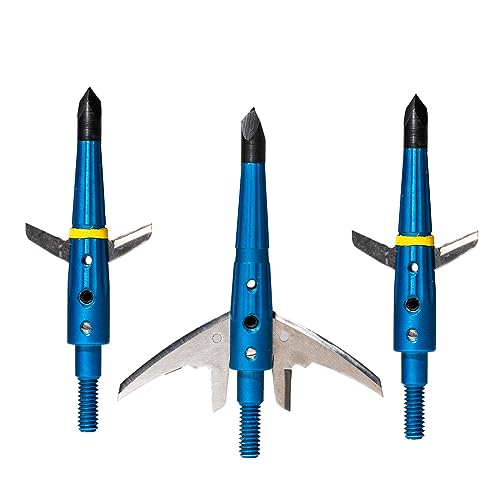


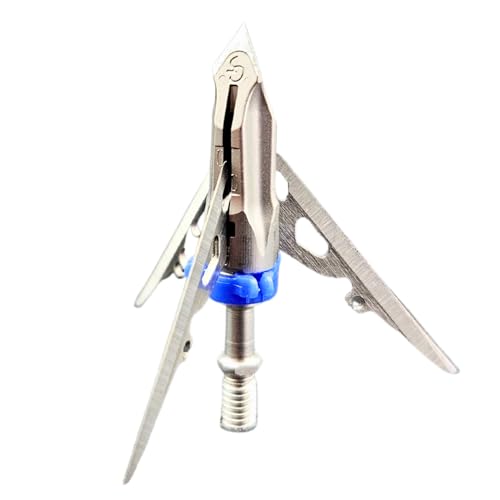 G5 Megameat 125 Grain Broadhead (MM101)
 Rage Chisel Tip 2-Blade Broadhead, 100 Grain