Key takeaways
- Compare the best aviation snips for cutting sheet metal, ductwork and flashing, with forged and offset picks for straight runs, curves and tight notches.
Cutting sheet metal with the wrong tool turns a simple job into sore hands and wavy edges. Aviation snips solve that problem with compound-action jaws that multiply the force of each squeeze, so flashing, duct, and trim cuts come out clean without fighting the material. The catch is that aviation snips are not interchangeable: cut direction, jaw length, and blade construction all change how a pair behaves, and the wrong style leads to chewed edges and early fatigue.
This guide compares five aviation snips that cover the main jobs around a house and small shop: straight runs down a sheet, curves in either direction, tight notches, and occasional cuts for someone who picks up snips a few times a year. Each pick is a real, currently sold model from a known tool brand.
As an Amazon Associate, we earn from qualifying purchases.
Quick answer
For most people, the Crescent Wiss M3R is the single pair to buy first, because it cuts straight and turns gentle curves in both directions. Duct and flashing work full of corners is easier with the Midwest MWT-6510C offset set, while the Midwest Bulldog MWT-6716B adds leverage on straight cuts. The IRWIN 2073113 is a dependable spare, and the Amazon Basics snip covers occasional light jobs.
Crescent Wiss M3R MetalMaster Compound Action Snips
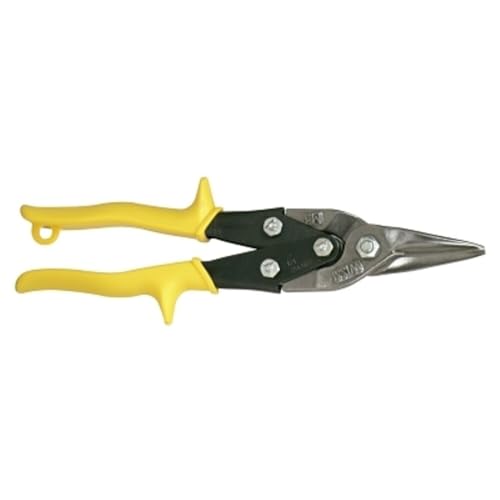
The Wiss M3R is the classic one-pair answer for homeowners who do not want to think about cut direction before every job. Its yellow handles signal that it cuts straight and turns slight curves to the left or right, which covers most cuts in flashing, gutter stock, and light ductwork. The blades are precision cast molybdenum with machined serrations along the edge, and those serrations matter: they grip the sheet as the jaws close, so the metal feeds through the cut instead of sliding away from it, and the finished edge comes out cleaner.
Wiss rates the M3R for low-carbon, cold-rolled steel up to 18 gauge, the standard ceiling for this class of snip and enough for residential duct, most flashing, and siding accessories. The spring-assisted action reopens the jaws after each squeeze, the latch works one-handed for either hand, and the pivot uses a free-float design that keeps the bolt from binding as the tool ages.
Where it falls short is geometry, not quality. A straight-head snip keeps your knuckles in the same plane as the cut, so on a long run down a wide sheet your hand drags against the metal, and tight curves ask more of it than it wants to give. Treat the M3R as the versatile default rather than a specialist: it finishes almost any household cut, but an offset pair is faster on jobs that are mostly corners and circles.
Midwest MWT-6510C Aviation Snip Set, Left and Right Offset

The Midwest MWT-6510C is a two-piece set built around offset heads, and the offset is the whole point. The handles sit above the cutting line, so the sheet passes under your knuckles instead of across them. That change makes long cuts down a duct section or across a roof panel far more comfortable, and it lets you keep cutting without lifting the metal with your free hand. Because the set pairs a left-cut and a right-cut snip, you choose the tool by which side of the line the waste falls on, and a radius in either direction stays smooth.
Midwest forges the blades from molybdenum alloy steel, hot drop-forged and heat-treated, and grinds them to cut from the heel of the jaw all the way to the tip. Midwest calls this pinch-thru-point cutting: the last bit of a notch, or the start of a cut mid-sheet, does not need a second bite. The set is rated for 18-gauge cold-rolled steel, carries the brand’s cushioned KUSH’N-POWER grips, and is made in the USA.
The trade-offs are simple. Two tools cost more than one, and a homeowner who cuts a few pieces of flashing a year will never use the second direction enough to justify the set. For HVAC helpers, roofers, and anyone who regularly cuts duct, trim coil, or panels with real corners, though, this is the most capable curve-cutting setup in the group.
Midwest Bulldog MWT-6716B Aviation Snip

The Bulldog takes the opposite approach from the offset set: instead of changing the handle angle, it shortens the jaw. Less blade between the pivot and the cut means more of your hand strength arrives at the metal, so straight cuts through heavier stock take less effort per squeeze. Midwest builds it with the same hot drop-forged molybdenum alloy blades as its other snips, heat-treated and serrated so the edge bites from heel to tip, and rates it for 18-gauge cold-rolled steel.
That tip behavior is why the Bulldog earns a place of its own. Starting a notch at a corner or punching the first cut into the middle of a sheet is where a standard-length snip tends to skate or stall, and the short jaw starts the cut where you put it. The KUSH’N-POWER grips are chemical resistant, and at just under fourteen ounces the tool feels dense and controlled rather than bulky. Midwest also backs the blades and spring with a limited lifetime warranty.
Short jaws are a specialization, so be honest about the limits. The Bulldog gives up reach and curve ability to gain leverage, and it is the wrong choice for long sweeping cuts or tight radii. Think of it as the notching tool you grab when the metal is at the thick end of what hand snips should handle.
IRWIN Aviation Snip, Straight Cut (2073113)

The IRWIN 2073113 is the straightforward, no-drama straight cutter of the group. At nine and a half inches it is a touch more compact than the Wiss, with a compound-action head, serrated jaws that hold the sheet while you cut, textured grips, and a simple close latch for storage. IRWIN positions it as a general-purpose snip for mixed materials, and that framing fits: the same pair gets borrowed for plastic, vinyl, rubber, and other shop materials that would dull a finer blade.
In a kit, the 2073113 makes the most sense as the dependable second pair, or the first pair for someone whose cutting is mostly short, straight, and occasional. The compound leverage keeps effort reasonable on common duct and flashing gauges, the grips stay secure without needing gloves, and the latch keeps the jaws shut in a drawer so the edges survive storage. It is also the pair you hand to a helper without a speech.
What you give up versus the top picks is refinement. The blades are not forged to the standard of the Midwest tools, and the head is a plain straight pattern with the usual knuckle clearance limits on long cuts. None of that matters for trim work, patch panels, and general shop cutting, which is exactly the work this snip is built for.
Amazon Basics Straight Cut Aviation Snip

Not every reader needs a trade-grade tool. The Amazon Basics straight cut aviation snip exists for the homeowner who cuts a few pieces of flashing, a dryer vent run, or some hobby metal each year and wants a functional pair waiting in the drawer. It follows the standard pattern for the category: compound-action jaws, a straight head for straight runs and wide curves, comfort grips, and a locking latch.
Judged against occasional use, that is enough. The leverage is there for common household gauges of sheet metal and aluminum, the straight head is the most forgiving pattern to learn on, and keeping a dedicated pair for metal means your household scissors stop taking the abuse. It also works as a loaner in a second toolbox.
The limits show up with volume and thickness. Edge life, grip comfort over a long session, and jaw stiffness on heavier stock are where budget snips separate from forged trade tools, and daily duct work will wear this pair out on a schedule a Midwest or Wiss would shrug off. Buy it for the workload it is built for, and it is a sensible purchase rather than a compromise.
How to choose
Start with cut direction, because it decides the shape of your whole kit. Snips are color coded across brands: red handles cut left, green handles cut right, and yellow handles cut straight with gentle curves either way. Direction describes the way the tool turns through the metal, not the hand you hold it in. If you buy one pair, buy yellow. If your work is full of circles, corners, and duct fittings, a left and right pair saves you from forcing a straight snip around curves it hates.
Next, look at head style. Straight heads are compact and fine for short cuts, but your hand rides in the plane of the sheet. Offset heads raise the handles so long cuts and wide panels pass under your knuckles, which is why duct and roofing work favors them. Short-jaw bulldog patterns trade reach for leverage and shine on notches and heavier stock. One straight or bulldog pair plus an offset pair covers nearly everything.
Then check capacity and blade construction. Every snip here is rated around 18-gauge cold-rolled steel, and stainless is harder on edges than the same gauge of mild steel, so treat stainless ratings as lower. Forged molybdenum alloy blades hold an edge longer than cast or stamped blades, serrations help the cut track straight, and a spring-assisted reopening action reduces fatigue on repetitive work. Finally, grips that fill your palm without hot spots matter more over a long afternoon than any single specification.
Who should skip
Skip aviation snips entirely if your cutting is mostly long, perfectly straight lines in full sheets. Snips walk slightly as they cut, and a bench shear, a circular saw with the right blade, or a utility knife and straightedge for thin aluminum gives a cleaner line with less effort. Anyone cutting thick plate, hardened steel, or wire and rod all day needs a different tool class, because forcing snips past their gauge rating spreads the jaws and ruins the edge.
Skip the premium forged picks if your metal cutting adds up to a vent hood and a few flashing patches a year; the budget straight snip finishes those jobs. Skip the offset set if you have never needed to cut a curve tighter than a coffee can. And skip the whole category if your hands struggle with grip strength and your workload is large: powered metal shears exist for that situation, and no handle shape fixes a leverage problem.
FAQ
What do the handle colors on aviation snips mean?
Red handles cut left, green handles cut right, and yellow handles cut straight. The direction describes how the jaws turn through the sheet and which side the waste curls away on, not which hand you use. Most brands follow this convention.
Can aviation snips cut stainless steel?
They can, in thin gauges, but stainless work-hardens and is harder on edges than mild steel of the same thickness. Treat a snip rated for 18-gauge cold-rolled steel as suitable for noticeably thinner stainless, and expect faster edge wear. For regular stainless work, choose a snip the maker explicitly rates for stainless.
What is the difference between offset and straight aviation snips?
A straight snip keeps the handles in line with the cut, so your knuckles ride close to the sheet. An offset snip bends the head so the handles sit above the cutting line, letting long cuts pass under your hand and making wide panels easier to manage. Offset pairs are the usual choice for ductwork and roofing.
How do I keep aviation snips cutting well?
Wipe the blades after use, keep the pivot clean, and add a drop of light oil to the joint now and then. Store them latched, never use them as pry tools or wire cutters, and stay within the rated gauge, since one overloaded cut can spring the jaws and make every later cut wander.
Final verdict
The Crescent Wiss M3R is the right first pair for most readers: one tool, three cut directions, and blades that track cleanly through household sheet metal. Add the Midwest MWT-6510C offset set when curves, corners, and duct sections become regular work, or the Midwest Bulldog when your straight cuts run thick. The IRWIN 2073113 is the honest general-purpose spare, and the Amazon Basics snip covers light, occasional jobs without apology. Match the snip to the cuts you actually make, and any of these five will feel like the right tool.
Product and ASIN Reference
| Product | ASIN |
|---|---|
| Crescent Wiss M3R MetalMaster Compound Action Snips | B00002N5KQ |
| Midwest MWT-6510C Aviation Snip Set, Left and Right Offset | B00OCGQG3S |
| Midwest Bulldog MWT-6716B Aviation Snip | B00OCGQJIA |
| IRWIN Aviation Snip, Straight Cut (2073113) | B000HB35AO |
| Amazon Basics Straight Cut Aviation Snip | B07RWV14KP |