Our Short List of 3
All 4 Picks at a Glance
| Product | Specs | Action |
|---|---|---|
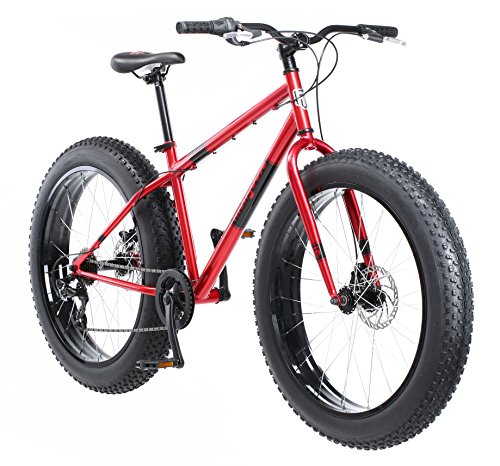 1. Mongoose Dolomite Fat Tire — best for rough ground | Check price on Amazon | |
| 2. Mongoose Malus Fat Tire — fat-tire alternative with Shimano shifting | Check price on Amazon | |
 3. VIRIBUS 700C Hybrid — best for pavement, commuting and fitness | Check price on Amazon | |
 4. sixthreezero Around the Block Men’s — best for relaxed, flat cruising | Check price on Amazon |
Key takeaways
- Best bike for a 250 lb man compared by published weight capacity, frame, wheels and brakes, with four heavy-duty picks and a clear guide to total load, fit and setup.
As an Amazon Associate we earn from qualifying purchases.
Affiliate Disclosure: This article contains affiliate links. If you buy through a link on this page, we may earn a commission at no extra cost to you. Product names, specifications and availability come from the makers’ and sellers’ listings, not from detailed research by us.
How to read this guide and the number in the keyword
This guide covers one specific job: a bicycle for a man who weighs about 250 pounds, ridden as an adult bike for commuting, fitness, neighbourhood rides and light trails. The trailing number in the keyword is kept in the slug and target keyword exactly as given, and this article distinguishes its intent by scope rather than by repeating a general heavy-rider list. Here the focus is narrow: a rider near that weight, the frame and wheels that carry him, and the margin left for clothing, a lock, a rack load and water. It is not a guide to bikes for much heavier riders, not a guide to children’s bikes, and not a guide to electric bikes as a separate category, although the same load logic applies if you later shop electric models.
That margin matters more than any single headline figure. A published weight capacity is a total load limit, not a promise that only body weight counts. If a bike is rated well above the rider’s weight, there is headroom for a backpack, a jacket and the small flex that happens when you stand on the pedals, hit a pothole or roll off a kerb. If a bike is rated only just above the rider’s weight, there is almost no headroom, and wheels, spokes and the seat post live close to their limit on every ride. For a rider around 250 pounds, look for a published capacity comfortably above that figure, stated by the maker or seller, and treat any bike with no stated capacity as a gamble rather than a bargain.
This article does not claim we compared these bikes. Every capacity, frame material, wheel size, gear count and brake type below is taken from the product listing or maker information for that model. Listings change, capacities are sometimes revised between colour or model-year variants, and a capacity quoted for one frame size does not always apply to another. Check the exact variant you are about to buy before you order, and stop using a bike that develops cracks, bent rims, loose spokes that will not stay true, or a seat post that slips under load.
Quick comparison
| Pick | Best for | Published capacity | Frame | Wheels and gears |
|---|---|---|---|---|
| Mongoose Dolomite Fat Tire | Trails, sand, snow and rough paths | Rated well above 250 lb in the listing | Steel | 26-inch fat wheels, 7 speeds |
| Mongoose Malus Fat Tire | Fat-tire riding with a Shimano drivetrain | Check the exact listing variant before buying | Steel | 26-inch fat wheels, 7 speeds |
| VIRIBUS 700C Hybrid | Pavement commuting and fitness | Rated well above 250 lb in the listing | Aluminium alloy | 700C wheels, 7 speeds |
| sixthreezero Around the Block Men’s | Relaxed cruising and flat routes | Rated above 250 lb in the listing | Steel cruiser frame | 26-inch wheels, single speed |
1. Mongoose Dolomite Fat Tire — best for rough ground
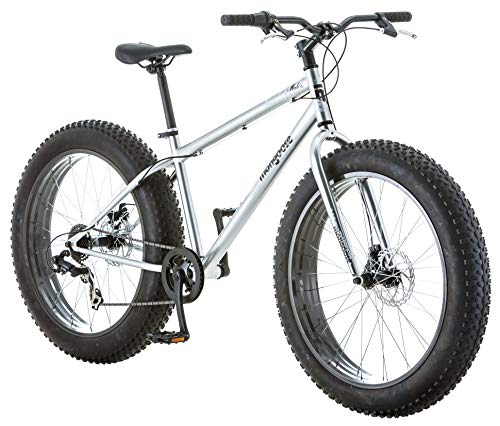
The Mongoose Dolomite is the most obvious starting point for a heavier man who does not want to stay on smooth pavement. Its listing describes a steel frame, 26-inch wheels with wide 4-inch knobby tyres, a 7-speed drivetrain and front and rear disc brakes. The listing gives a maximum weight recommendation well above 250 pounds, which is why it leads this list: the headroom is the point. A fat tyre spreads load over a larger contact patch, runs at lower pressure, and absorbs small impacts that a narrow tyre passes straight into the rim and spokes.
That width helps on loose surfaces too. On sand, gravel, mud and snow, a narrow tyre cuts in and wanders, while a fat tyre floats a little more and tracks more calmly at low speed. For a heavier rider, calm tracking is not a luxury. Correcting a front wheel that is digging in takes more effort when more mass is moving, and a bike that feels stable at walking pace is easier to trust when you are starting on a slight slope or turning in a tight space.
The trade-offs are real and should not be hidden. A steel fat-tire bike is heavy to lift onto a rack or carry up stairs, and those wide tyres roll more slowly on smooth tarmac than a hybrid tyre. The 7-speed range is enough for gentle hills and headwinds, but it is not a wide climbing range for steep, long grades, especially with a heavier total load. Plan routes accordingly at first, use the lowest gear early rather than grinding, and expect to walk a very steep pitch rather than forcing the drivetrain. If most of your riding will be paved commuting, the VIRIBUS below will feel quicker. If your routes include broken paths, beaches, winter streets or unpaved shortcuts, the Dolomite’s build makes more sense.
Fit notes from the listing put it in adult sizing, and the model name in the listing is the Mongoose Dolomite Fat Tire Mens Mountain Bike. Set the saddle so your knee keeps a slight bend at the bottom of the stroke, keep tyre pressure inside the range printed on the sidewall, and check spoke tension after the first few rides, because wheels settle under a new, heavier load.
2. Mongoose Malus Fat Tire — fat-tire alternative with Shimano shifting
The Mongoose Malus is a close relative of the Dolomite and a useful second fat-tire option rather than a duplicate in spirit. Its listing describes a steel frame, 26-inch wheels with 4-inch wide knobby tyres, a 7-speed drivetrain with a Shimano rear derailleur, and disc brakes. Retailer and listing summaries for the Malus describe it as supporting heavier riders, but published capacity figures vary by variant and seller, so this pick carries an explicit instruction: confirm the maximum weight recommendation on the exact Amazon listing variant, in your frame and colour, before you buy. Do not transfer a capacity figure from a different Mongoose model or a different model year.
Why include it at all if the Dolomite already covers fat tyres? Because availability and fit differ. Fat-tire models sell out in one colour or size while another stays listed, and small differences in reach, standover and saddle shape decide whether a bike gets ridden three times a week or sits in a garage. The Malus gives a heavier man a second steel fat-tire platform to compare on geometry and availability, with the same basic advantages: a wide contact patch, low-pressure cushioning, and disc brakes that keep working in wet and gritty conditions where rim brakes fade.
Use the same cautions as with any fat bike. It will be slower and heavier on pavement, steering will feel deliberate rather than twitchy, and tyre pressure needs regular attention because a soft fat tyre under a heavy rider can feel vague and can pinch or damage a rim on a hard edge. A floor pump with a gauge is not an accessory here; it is part of owning the bike. Keep pressure within the sidewall range, leaning toward the firmer end for pavement and the softer end only for genuinely loose ground.
The Malus suits a man around 250 pounds who wants trail, beach and bad-weather capability and who is willing to verify the capacity of the exact listing before ordering. If that verification does not show a comfortable margin over your total riding load, choose the Dolomite or the VIRIBUS instead rather than hoping the frame will cope.
3. VIRIBUS 700C Hybrid — best for pavement, commuting and fitness
The VIRIBUS Hybrid is the pavement answer in this list. Its Amazon listing describes a lightweight aluminium alloy frame, 700C wheels, a 7-speed derailleur with a thumb shifter, dual disc brakes, a cushioned seat and a front light, and it states a weight capacity well above 250 pounds, with the frame described as carrying up to that higher figure. It also states the bike arrives largely pre-assembled. For a man whose riding is commuting, canal paths, park loops and fitness miles on tarmac, that combination is more relevant than fat tyres: narrower 700C tyres roll faster, the aluminium frame is easier to lift and store, and disc brakes give consistent stopping in rain.
The upright hybrid position is another practical advantage. It puts weight more evenly between saddle, pedals and hands than a dropped-bar road position, which many returning riders find easier on the back, neck and wrists. At around 250 pounds, contact-point comfort decides ride length. A saddle that is tolerable for twenty minutes can become the reason a ride ends at forty, so budget time to adjust saddle height, tilt and fore-aft position in small steps, and consider padded shorts before you consider a softer, wider saddle that may chafe.
Be honest about the limits. A 7-speed range is simple and easy to maintain, but steep hills with a heavier load will still be hard work, and 700C wheels with narrower tyres are less forgiving on potholes, broken edges and loose gravel than fat tyres. Ride a line that avoids drain grates and sharp kerb edges, keep tyres at the pressure printed on the sidewall, and check the wheels for true after impacts. The listing’s stated capacity gives headroom, but headroom is not permission to add a heavy rack load without counting it. Rider, clothing, lock, bag and water all count toward the total.
The VIRIBUS suits a 250-pound man whose miles are mostly paved and who wants a lighter, quicker-feeling bike that still publishes a capacity with margin. It is the pick we would start with for commuting and fitness, provided the exact listing variant still states that capacity when you order.
4. sixthreezero Around the Block Men’s — best for relaxed, flat cruising
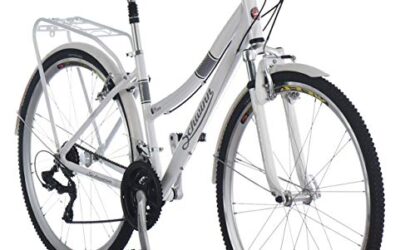
The sixthreezero Around the Block Men’s is the comfort cruiser in this group. Its Amazon listing describes a men’s beach cruiser with 26-inch wheels, a rear rack, a single-speed drivetrain in this variant, and a maximum weight recommendation above 250 pounds. That margin is smaller than the margin on the Dolomite or the VIRIBUS, so this is a pick for a rider close to 250 pounds whose total load stays light, on flat routes, at relaxed speeds — not for a rider well above that weight, and not for loading the rear rack heavily on top of body weight.
What the cruiser gives back is simplicity and ease. A single speed means no shifting to learn, fewer adjustments, and a drivetrain that tolerates neglect better than a multi-gear setup. The swept-back cruiser position, wide saddle and relaxed geometry suit boardwalks, flat neighbourhood streets and short errands where the ride itself is the point. The rear rack is useful for a jacket, a small bag or a lock, as long as you remember that rack cargo counts toward the same total limit.
The limits follow from the same simplicity. One gear on a hill, into a headwind, or starting from a stop at a junction with a heavier load is hard on knees and slow in traffic. If your area is not genuinely flat, choose a geared pick from this list instead. Rim or coaster-style braking on cruiser variants also needs more anticipation than disc brakes in wet weather, so leave a larger gap, brake earlier, and keep rims and pads clean. Check the exact variant on the listing, because Around the Block is sold in different speeds and frame styles, and the capacity and brake type belong to the variant, not the name alone.
This pick suits a 250-pound man who wants unhurried, flat, short rides and values comfort and simplicity over speed or hill ability, and who will keep the total load close to the published limit rather than treating the limit as a target.
How to choose for a rider around 250 pounds
Start with total load, not body weight alone. Add what you wear and carry on a typical ride, then compare that total with the published capacity of the exact variant. Prefer a clear margin. A small margin can work for gentle, flat, well-maintained routes; a larger margin is the safer choice for rough surfaces, hills, standing efforts and regular use. If a listing does not state a capacity, or the seller cannot confirm it, treat that as a reason to choose a different bike, not as a detail to ignore.
Next, match the tyre to the surface. Fat tyres earn their extra weight and rolling resistance on sand, snow, mud and broken ground. On pavement they feel slow, and that slowness discourages the regular riding that makes a bike worthwhile. Hybrid 700C tyres are the opposite trade: efficient and light on tarmac, less secure on loose surfaces. Cruiser tyres sit between the two for comfort on flat, paved routes. Most men buying for fitness and transport do most miles on pavement, which is why the hybrid is often the best first choice despite the fat bikes’ higher headline capacities.
Then think about wheels and brakes, because those parts carry the load every ride. More spokes, well-tensioned spokes and rims in true are not cosmetic details for a heavier rider. Ask a local shop to check spoke tension and wheel true after the first rides and again after any hard impact. Disc brakes, fitted to the Dolomite, Malus and VIRIBUS listings here, generally offer more consistent stopping in wet conditions and with heavier loads than rim brakes, but they still need clean pads and rotors and a firm lever feel. Any brake that feels spongy, squeals constantly after bedding in, or needs a longer pull than it used to should be inspected before the next ride, not after it.
Gearing deserves a plain assessment. Seven speeds cover flat to rolling ground for most riders. Single speed covers genuinely flat ground only. If you are returning to riding after a break, lower gearing protects your knees and makes you more likely to ride again tomorrow. There is no prize for grinding a hard gear, and a knee injury ends a fitness plan faster than a walked hill does.
Sizing and setup notes
Frame size is about reach and standover as much as height. You should be able to stand over the top tube with clearance, reach the bars without locking your elbows, and pedal without your knees coming up uncomfortably high. Listing height ranges are a starting point only. If you are between sizes and carry more weight, the size that gives you an upright, controlled position is usually easier to live with than the size that promises a racier stretch.
Frequently asked questions
Is a standard bike enough for a 250-pound man?
Some standard bikes publish capacities with enough margin, and some do not publish a capacity at all. The safe approach is to choose by the stated limit for the exact variant and your total load, not by whether a bike is marketed to men or described as sturdy. The picks above were chosen because their listings state capacities or, for the Malus, because the model is listed for heavier riders with an explicit instruction to confirm the exact variant.
Should a heavier rider choose a fat-tire bike or a hybrid?
Choose by surface first. Fat tyres help on loose and rough ground and give a calm, cushioned ride. A hybrid is lighter, faster and easier to live with on pavement, which is where most commuting and fitness miles happen. Capacity matters in both cases, so do not let tyre width substitute for a stated limit.
How much margin above body weight is enough?
There is no single safe number that fits every rider and route, which is why this guide talks about margin qualitatively. More margin is better for rough surfaces, hills, cargo and frequent riding. Less margin demands lighter cargo, gentler routes and closer attention to wheels and spokes. If your total load is close to a bike’s stated limit, choose the next stronger option.
What should be checked first after buying?
Spoke tension and wheel true, brake lever feel, tyre pressure, saddle height and every bolt on the stem, seat post and rack. Repeat the wheel and brake checks after the first few rides and after any pothole or kerb strike. A heavier load makes early settling normal, not a sign that you bought the wrong bike, as long as you catch it early.
Bottom line
For rough ground and the largest stated margin, start with the Mongoose Dolomite. For a second fat-tire option, compare the Mongoose Malus and confirm its exact listing capacity before buying. For paved commuting and fitness, the VIRIBUS 700C Hybrid is the most practical pick here. For flat, relaxed cruising with a light total load, the sixthreezero Around the Block Men’s is the simplest option.