Key takeaways
- Compare five electric toothbrushes for daily oral care: oscillating and sonic models with pressure sensors, timers, travel cases and a kids option.
An electric toothbrush builds the structure of a good brushing routine into the handle itself. Built-in timers track the two minutes that brush makers and dental associations use as the standard session length, quadrant pacers divide that time evenly across the mouth, and pressure sensors warn you when you push too hard. Instead of scrubbing harder, you guide the brush slowly from tooth to tooth and let the moving bristles do the work.
The five brushes below cover the main designs sold today. Two use Oral-B’s round oscillating heads, two use Philips Sonicare’s longer sonic heads, and one is a compact battery model built for travel. The lineup includes a straightforward starter brush, a sonic model with a pressure sensor, a premium brush with a visible pressure light ring, a travel brush that runs for months on one AAA battery, and a kids brush with app coaching for ages three and up. Each entry lists the modes, battery figures stated by the maker, timer type, and what arrives in the box, so you can match a brush to your routine rather than to a marketing headline.
As an Amazon Associate, we earn from qualifying purchases.
How to Choose
Start with the brushing action. Oscillating brushes, like the Oral-B models here, use a small round head that rotates, oscillates, and pulsates around each tooth. Sonic brushes, like the Philips Sonicare models, use an elongated head driven at high frequency, with bristle movement and fluid action cleaning along the gumline. Neither design removes the need for technique: both work best with slow, deliberate passes and light pressure.
Next, look at modes and intensity settings. A single daily clean mode is enough for many people, while sensitive modes and lower intensity settings suit tender gums or first-time electric brush users. Several models here also add a whitening or polish setting. EasyStart on the Sonicare 4100 gradually increases power over the first 14 uses, which helps new users adjust.
Pressure feedback is the third factor. The Oral-B Pro 1000 slows its pulsations when you press too hard. The Sonicare 4100 pulses its handle as a warning. The Oral-B iO Series 3 goes furthest, with a light ring that glows green at the maker’s stated optimal pressure, red when pressure is too high, and white when it is too low. These features describe brushing force only; they do not measure cleaning results.
Finally, compare timers, batteries, and running costs. Every brush here has a two-minute timer, and most add a pacer that signals every 30 seconds. Rechargeable models state runtimes from about 10 days to 14 days per charge, while the Philips One runs on a replaceable AAA battery that Philips states lasts up to three months. All makers advise replacing brush heads roughly every three months, or sooner if bristles look worn, so check that the head family for your model is easy to find before you buy.
Head and handle size matter more than spec sheets suggest. A small round oscillating head can be easier to maneuver around back molars and braces, while a longer sonic head covers more surface per pass and feels familiar to manual brush users. Households sharing one charger should note that Oral-B and Sonicare heads are not interchangeable, so each person needs a handle from the same system or a separate brush. If counter space is tight, a compact charging base or a battery model like the Philips One keeps the sink area clear.
Oral-B Pro 1000

The Pro 1000 is Oral-B’s long-running entry point into oscillating brushes, and it keeps the formula simple. The round CrossAction head surrounds each tooth with bristles angled at 16 degrees, and the 3D cleaning action oscillates, rotates, and pulsates. A pressure sensor stops the pulsations when you brush too hard, and the in-handle timer pulses every 30 seconds so you spend equal time in each quadrant of the mouth.
The current listing describes three cleaning modes, including a sensitive option, and Oral-B’s comparison chart states a battery runtime of up to 10 days with the standard charger. The handle works with the wider Oral-B replacement head range, including CrossAction, FlossAction, and 3D White heads, which makes refills easy to source. One CrossAction head and a charging station are included in the box. Oral-B notes the brush is not for children under age three, and the slim handle suits adults and older teens who want a no-frills rechargeable brush.
Specs
- Type: Oscillating, rotating, and pulsating round head
- Modes: 3 cleaning modes
- Battery: Rechargeable, maker-stated up to 10 days
- Timer: 2-minute timer with 30-second quadrant pulses
- Extras: Pressure sensor; 1 CrossAction head and charger included
Philips Sonicare 4100

The Sonicare 4100 (model HX3681/24) is a sonic brush for people who prefer a longer, manual-style head. Philips’ sonic technology drives the bristles at high speed and pulses fluid between the teeth and along the gumline. A built-in pressure sensor tells you when to ease off, and two intensity settings let you start gently and increase power as you adjust.
Timing is handled by the SmarTimer, which tracks the full two minutes, and the QuadPacer, which signals every 30 seconds. Philips states up to 14 days of regular brushing per charge, based on two two-minute sessions per day. A brush head replacement reminder tracks how long and how hard you have brushed and signals when a new head is due. The box includes one handle, one C2 Optimal Plaque Control head, and a charger. The handle accepts the wider Sonicare click-on head range, so switching between plaque control, gum care, and whitening heads later is straightforward.
Specs
- Type: Sonic with elongated head
- Modes: 1 mode with 2 intensity settings
- Battery: Rechargeable, maker-stated up to 14 days
- Timer: SmarTimer 2-minute timer with QuadPacer
- Extras: Pressure sensor, EasyStart ramp-up, head replacement reminder; 1 C2 head and charger included
Oral-B iO Series 3 Limited

The iO Series 3 Limited is the pick for anyone who wants the clearest possible feedback on brushing pressure. Its smart pressure sensor lights a ring on the handle: green signals the pressure range Oral-B describes as optimal, red warns of over-pressure, and white shows pressure that is too low. The magnetic drive combines the round head’s oscillations with gentle micro-vibrations for a quieter feel than older Oral-B handles.
Three cleaning modes cover Daily Clean, Sensitive, and Whitening. The light ring doubles as the two-minute timer display and celebrates a completed session, and a refill alert reminds you when three months with the current head have passed. Oral-B describes the lithium-ion battery as long-lasting without publishing a day count on the listing. This set includes two brush heads, a travel case, and a charger, so it suits frequent travelers who still want a full-size brush.
Specs
- Type: Oscillating with micro-vibrations, magnetic drive
- Modes: 3 (Daily Clean, Sensitive, Whitening)
- Battery: Lithium-ion rechargeable, described by the maker as long-lasting
- Timer: 2-minute light-ring timer with quadrant pacing
- Extras: Visible pressure sensor light ring, refill reminder; 2 heads, travel case, and charger included
Philips One by Sonicare
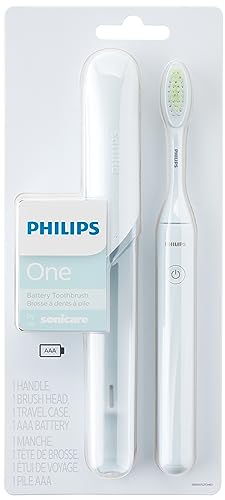
The Philips One (model HY1100/03) strips the electric toothbrush down to travel size. It uses sonic micro-vibrations, runs on a single AAA battery, and Philips states that one battery lasts up to three months, so there is no charger or cable to pack. A two-minute timer with notifications every 30 seconds keeps sessions on track even in a hotel bathroom.
The slim handle comes in several colors and ships with a matching travel case that keeps the head covered in a bag or drawer. There is only one mode and no pressure sensor, which keeps the design simple and light. Replacement heads are specific to the Philips One line, so check availability if you plan to use it as your only brush. The box includes the handle with one brush head, the travel case, and one AAA battery. Because it never needs a charging stand, it also works well as a guest bathroom or gym bag brush, and the tapered head shape is easy to angle around back teeth despite the small handle.
Specs
- Type: Sonic micro-vibrations, compact handle
- Modes: 1 mode
- Battery: 1 AAA battery, maker-stated up to 3 months
- Timer: 2-minute timer with 30-second notifications
- Extras: Travel case and AAA battery included; 1 brush head
Philips Sonicare for Kids
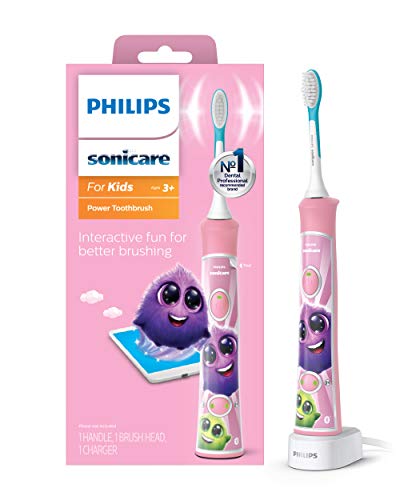
The Sonicare for Kids (model HX6351/41) adapts the sonic platform for children, with maker age guidance of three years and up. It connects by Bluetooth to Philips’ interactive app, where a character coaches kids through each session and rewards completed brushings. The KidTimer gradually builds session length up to two minutes, and the KidPacer uses fun sounds to prompt kids to move to a new section of the mouth.
Two gentle power modes let parents start low and step up as a child gets used to the brush. The handle is sized for smaller hands and has a rubberized grip, and the brush uses smaller Sonicare for Kids heads. The handle also accepts fun sticker panels, which Philips includes as a way for kids to personalize the brush and tell it apart from a sibling’s. Philips states a runtime of up to 14 days per charge. The box includes the handle, one kids brush head, and a charging base. As with any kids brush, an adult should supervise sessions and follow the age guidance on the packaging.
Specs
- Type: Sonic, sized for kids
- Modes: 2 gentle modes
- Battery: Rechargeable, maker-stated up to 14 days
- Timer: KidTimer builds to 2 minutes, with KidPacer alerts
- Extras: Bluetooth app coaching; maker age guidance 3+; 1 kids head and charger included
Comparison
| Product | Action | Modes | Battery (maker-stated) | Standout feature |
|---|---|---|---|---|
| Oral-B Pro 1000 | Oscillating | 3 | Up to 10 days | Pressure sensor stops pulsations |
| Philips Sonicare 4100 | Sonic | 1 mode, 2 intensities | Up to 14 days | Pressure sensor and head reminder |
| Oral-B iO Series 3 Limited | Oscillating, micro-vibrations | 3 | Lithium-ion, long-lasting | Visible pressure light ring |
| Philips One by Sonicare | Sonic micro-vibrations | 1 | AAA, up to 3 months | Travel case, no charger needed |
| Philips Sonicare for Kids | Sonic, kids size | 2 | Up to 14 days | Bluetooth app, ages 3+ |
FAQ
How often should I replace the brush head?
All five makers advise replacing the head about every three months, or sooner if the bristles look frayed or worn. The Sonicare 4100 and the iO Series 3 track usage and remind you when a head is due, but a visual check works for any model.
Should I choose an oscillating or a sonic brush?
The difference is mainly head shape and motion. Oscillating brushes use a small round head that works tooth by tooth, while sonic brushes use a longer head closer to a manual brush shape. Both designs here include two-minute timers, so the better choice is the one whose head size and handle feel you will use twice a day.
What does a pressure sensor actually do?
It measures how hard the brush is pressed against the teeth and reacts when force passes the maker’s threshold. Depending on the model, it slows or stops pulsations, pulses the handle as a warning, or lights a colored ring. It is a coaching aid for technique, not a measure of how clean your teeth are.
Can a child use a regular adult electric toothbrush?
Makers publish age guidance for each model, and adult handles are larger with stronger standard modes. Kids models like the Sonicare for Kids use smaller heads, gentler modes, and timers designed for children, with guidance starting at age three for that model. Follow the age range printed on the box and supervise young children while they brush.
Final Verdict
For a proven starting point, the Oral-B Pro 1000 covers the essentials: oscillating action, a pressure sensor, quadrant pacing, and widely available heads. The Philips Sonicare 4100 suits sonic fans who want the same pressure feedback with a longer stated battery life and an easier ramp-up. Choose the Oral-B iO Series 3 Limited if the visible pressure light ring appeals to you and you want the travel case and spare head in the box. The Philips One is the natural travel companion, with months of runtime from one AAA battery. For children three and up, the Sonicare for Kids pairs gentle modes with app-based coaching that makes the two-minute routine easier to keep day after day.
Product and ASIN Reference
| Product | ASIN |
|---|---|
| Oral-B Pro 1000 Rechargeable Electric Toothbrush, White | B003UKM9CO |
| Philips Sonicare 4100 Series Electric Toothbrush, Black, HX3681/24 | B09LD7WRVS |
| Oral-B iO Series 3 Limited Electric Toothbrush, Black | B0B5HRWH1S |
| Philips One by Sonicare Battery Toothbrush, Mint, HY1100/03 | B08LJ6K8CH |
| Philips Sonicare for Kids Bluetooth Electric Toothbrush, Pink, HX6351/41 | B07W3T1G7C |