We independently review everything we recommend. When you buy through our links, we may earn a commission. As an Amazon Associate we earn from qualifying purchases.
4 Best Scopes for 350 Legend Rifles (November 2026)
Four scopes with reticles and dials matched to .350 Legend ballistics: a pre-calibrated Leupold, a 50mm Vortex for dim woods, a Burris and a Sightmark BDC.
Four scopes with reticles and dials matched to .350 Legend ballistics: a pre-calibrated Leupold, a 50mm Vortex for dim woods, a Burris and a Sightmark BDC.
A .350 Legend rifle asks one hard question of its scope: how will you handle the drop? Inside 100 yards the cartridge shoots flat enough that almost any reticle works, but past 150 yards the bullet falls fast, and holdover marks drawn for flatter centerfire cartridges quietly point you at the wrong place. The real decision is whether you want aiming help built for this cartridge’s trajectory, through a matched dial or a caliber-specific reticle, or a plain reticle whose holds you map yourself.
This guide is for deer hunters in straight-wall cartridge states, for shooters working field edges where 200-yard chances appear, and for anyone pairing one scope with a single trusted hunting load. Every pick below comes from Amazon listings that document a .350 Legend dial, a .350 Legend reticle, or a straight-wall BDC reticle, and the specifications quoted are the ones those listings publish.
Quick Picks
As an Amazon Associate we earn from qualifying purchases
Product
Best for
Key spec from title
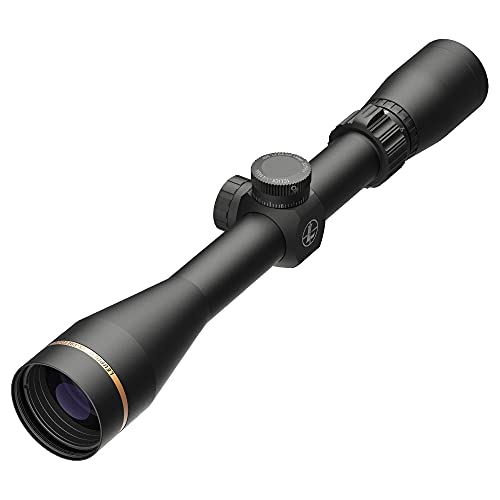
Leupold VX-Freedom 3-9×40 350 Legend
Dialing with a factory-matched .350 Legend dial
Pre-calibrated ballistic dial, Duplex reticle
Vortex Crossfire II 3-9×50 Straight-Wall BDC
Dim timber and first or last light
50mm objective, Straight-Wall BDC reticle
Burris Fullfield E1 3-9×40 350 Legend
Holdover shooting with a simple plex reticle
Ballistic Plex reticle drawn for .350 Legend
Sightmark Core HX 3-9x40VHR Venison Hunter
150-grain loads and mixed deer and coyote work
VHR BDC reticle set for 150-grain .350 Legend
How to Choose
Match the Reticle or Dial to the Cartridge
A generic BDC reticle assumes a generic trajectory, and the .350 Legend does not follow one. Its bullet starts slower than a .223 or .308 hunting load and sheds speed quickly, so marks spaced for flatter cartridges land progressively lower than the bullet as distance grows. Caliber-specific designs fix that spacing at the factory: a dial pre-calibrated for .350 Legend ballistics, or reticle holds drawn around a stated reference load. Before choosing, check what the listing says the marks assume, because a reticle set for a 150-grain load will not sit true under a 180-grain load at 200 yards.
Pick Magnification for Your Actual Distances
Most .350 Legend hunting happens between 40 and 200 yards, and a 3-9x range covers that span without compromise at either end. The low setting matters more than the top: at 3x you keep a wide field of view for a deer stepping out of brush at 40 yards, while 9x is enough to place a careful shot across a cut field. Scopes starting at 5x or 6x feel cramped in timber, and very high top ends add weight and narrow eye boxes for reach this cartridge rarely uses. Match the power range to your longest realistic shot, not your longest imaginable one.
Weigh Objective Size Against Light and Handling
Deer move at dawn and dusk, so the 40mm versus 50mm choice is a genuine trade. A 50mm objective gathers more light in dark timber and stretches usable shooting minutes at both ends of the day, and makers pair it with fully multi-coated lenses to keep the image bright. The penalty is bulk: a bigger bell usually needs taller rings, raises the scope line above the stock, and adds ounces to a rifle many hunters chose for being handy. A 40mm scope mounts lower, keeps cheek weld natural, and still serves well in open fields and brighter woods.
Check Tube, Turrets and Sealing for a Hunting Rifle
All four scopes here use a 1-inch tube, which keeps ring choices simple and inexpensive across most hunting rifles. Capped turrets suit a set-and-hold style of hunting because brush cannot knock them off zero, while a dialing scope needs turret markings you can read with cold fingers. Sealing matters as much as glass: look for waterproof and fogproof construction in the listing, since a scope that fogs on a frosty morning ends the hunt. Eye relief deserves a glance too; the .350 Legend recoils mildly, but a short eye box still punishes a hurried mount on a moving deer.
Hunters who prefer dialing distance over holding over, with one settled load.
Watch out for
The dial follows Leupold’s reference ballistics for the cartridge, so confirm your chosen load tracks it at the range; the plain Duplex gives no holdover marks if you would rather hold than dial.
Leupold builds this VX-Freedom variant around the cartridge itself: its dial leaves the factory pre-calibrated for .350 Legend ballistics, so you range the deer, turn to the distance, and hold center instead of guessing holdover. The Duplex reticle keeps the picture uncluttered, with heavy outer posts that pull your eye to the middle in poor light. Leupold’s Advanced Optical System and scratch-resistant lenses handle bright midday glare and dark woods edges, and the scope is designed, machined and assembled in the USA. It suits hunters who shoot one load, confirm the dial at the range, and want distance handled mechanically.
Vortex aims this Crossfire II variant at straight-wall hunters directly: its Straight-Wall BDC reticle is documented in the listing as optimized for popular straight-wall options, the family the .350 Legend belongs to. The 50mm objective is the low-light pick of this group, pulling in enough light for shots under a closed canopy or in the last minutes of legal time. Fully multi-coated lenses, long eye relief and a fast-focus eyepiece keep the image forgiving when a deer appears quickly, and the aircraft-grade aluminum body is sealed against water and fog. Vortex backs it with the VIP lifetime warranty described in the listing.
Eye relief: long eye relief design with fast-focus eyepiece
Construction: aircraft-grade aluminum, waterproof and fogproof
Warranty: Vortex VIP lifetime warranty
Best for: Woods hunters who need every minute of dawn and dusk light.
Watch out for: The 50mm bell generally needs taller rings and adds bulk over the barrel; the reticle gives MOA-based holdover references rather than a dial matched to one load, so verify the holds with your ammunition.
ASIN: B09D85D3PF
Hunters who want caliber-drawn holdover marks without dialing or electronics.
Watch out for
Eye relief is the shortest in this group and parallax is fixed at 50 yards, so check the fit on your rifle; the marks follow Burris’s reference load, and other bullet weights will shift them.
Burris keeps its approach simple: the Ballistic Plex reticle in this Fullfield E1 variant is drawn specifically for the .350 Legend, with holdover marks Burris lays out for shots stretching toward 500 yards, far beyond where most hunters use the cartridge. The reticle stays clean, with a fine center and uncluttered lower marks that suit quick shots in the woods as well as deliberate ones in the open. Burris builds the scope around high-grade optical glass with Hi-Lume multi-coatings, an integrated eyepiece with a no-slip grip for gloved hands, and a nitrogen-filled body sealed against water and fog. The Burris Forever Warranty covers it.
Shooters running 150-grain loads who want ranging help built into the reticle.
Watch out for
The drop marks are tied to 150-grain ballistics, so heavier or lighter loads will not sit on the marks at longer distances; confirm the subtensions in the manual against your load.
Sightmark’s Venison Hunter pairs its BDC holds with something the others skip: a range-finding reticle. The VHR reticle’s bullet-drop marks are set, per the listing, for 150-grain .350 Legend loads, and its ranging brackets are sized around whitetail deer and coyote, so you can estimate distance and hold in one picture. The single-piece tube is machined from aircraft-grade aluminum, the turrets are capped and resettable, and the body is sealed against shock, water and fog. For a hunter who splits time between deer season and predator calling with the same rifle, this is the most feature-dense scope in the group.
Which One Fits Your Situation
Hunting Thick Timber at Close Range
Shots inside 75 yards punish slow target acquisition more than weak magnification. The Vortex Crossfire II earns this spot: dial it to 3x, and the 50mm objective keeps shaded woods bright while the long eye relief gives a full picture the moment the rifle comes up. Its BDC marks rarely matter at this distance, but the light gathering decides shots that a dimmer scope would pass up.
Field Edges and Cut Corn Out to 200 Yards
Open ground is where holdover marks pay for themselves. The Burris Fullfield E1’s Ballistic Plex reticle was drawn for this cartridge, so the lower marks give you a planned aiming point instead of a guess partway down the post. Sight in with your hunting load, confirm the second and third marks on paper, and a 175-yard chance across a bean field becomes a routine shot rather than a hopeful one.
One Rifle, One Load, No Fuss
If you buy one box of ammunition at a time and shoot it all season, the Leupold VX-Freedom removes the reticle homework. Its dial is pre-calibrated for the cartridge, so distance work becomes turning a turret instead of memorizing marks. Confirm the dial against your load at 100, 150 and 200 yards once, and the system stays honest for as long as you keep feeding the rifle the same load.
Deer in Fall, Coyotes All Winter
A rifle that works two seasons needs a reticle that works two ways. The Sightmark Core HX pairs its 150-grain drop marks with ranging brackets sized for deer and coyote bodies, which helps when a coyote hangs up at an unknown distance across a frozen field. The capped turrets stay put through truck rides and fence crossings, and the 3-9x range covers a close woodlot shot as easily as a long winter one.
Common Mistakes
Buying a scope whose BDC marks were drawn for a flatter cartridge like .223 Remington or .308 Winchester, then trusting those marks at 200 yards with a .350 Legend.
Assuming every factory load matches the reticle’s reference load, when switching between 150-grain and 180-grain bullets moves the point of impact off the marks.
Mounting a 50mm objective on low rings so the bell crowds or touches the barrel, instead of sizing ring height to the scope.
Choosing a high-power scope that starts at 6x, which narrows the field of view too much for deer appearing at 40 yards in timber.
Skipping a range session to confirm dial settings or holdover marks with the exact load you will hunt with.
Frequently Asked Questions
What magnification range suits the .350 Legend?
A 3-9x scope covers the cartridge’s honest hunting distances, from close timber to roughly 250 yards. The low end keeps a wide view for near shots, and 9x gives enough enlargement for careful placement at the far end. Every scope in this guide uses that range, which is one reason the cartridge and the classic deer-scope format pair so well.
Do I really need a reticle or dial made for this cartridge?
It helps more here than with flatter cartridges. The .350 Legend drops quickly past 150 yards, so generic holdover marks drift away from the real trajectory. A dial pre-calibrated for the cartridge, or marks drawn around a stated .350 Legend load, removes that error. A plain reticle still works if you map your own holds at the range.
Which bullet weight are these BDC marks set for?
It depends on the maker, so read the listing and manual for the model you choose. Sightmark states its VHR reticle is set for 150-grain .350 Legend loads, while Burris and Leupold build their marks and dial around their own reference ballistics for the cartridge. If your hunting load differs, confirm the marks on paper before the season.
Can I use one of these scopes on another rifle later?
Yes, within reason. All four use 1-inch tubes and second-focal-plane reticles, so they remount easily on other deer rifles. The caliber-specific help travels less well: a dial or reticle drawn for .350 Legend drop will not match a flatter cartridge’s trajectory, so on a different chambering treat the marks as rough references and re-confirm every distance.
K
Kissmyaster Editorial Team
We compare specs, materials and verified owner reviews before a product earns a spot. Rankings are never paid.
Affiliate disclosure. As an Amazon Associate we earn from qualifying purchases at no extra cost to you. Prices accurate as of the date shown.
Compare compact CPAP machines sold with travel bags and cases: a battery travel bundle, a humidifier model with a full kit, and a home and travel unit.
Find the best pink rims 20 inch for your car with our guide to bolt pattern, offset, and bore, plus two verified pink 20-inch wheels that fit a 5x114.3 hub.
The best 225 45 R17 tires for daily driving, compared by size, load index, and tread type. Five 225/45R17 tires in all-season and winter form for your car.