Key takeaways
- Compare the best lawn aerators for healthy grass, from manual core tools to spike aerators and walk-behind models, with tips for choosing the right type.
- Top Pick: Yard Butler ID-6C Manual Lawn Coring Aerator
- Runner-up: Landzie Original Hollow Tine Lawn Aerator, 42-Inch
- Also consider: Agri-Fab 45-0365 Push Spike Aerator, 16-Inch
A lawn that looks thin, patchy, or worn despite regular watering and feeding often has a problem below the surface. Compacted soil squeezes out the air pockets that roots need, and water runs off instead of soaking in. Aeration opens the soil so air, water, and nutrients can reach the roots.
Lawn aerators come in two main types. Core aerators, also called plug aerators, use hollow tines to pull small cylinders of soil out of the ground. Spike aerators use solid tines or discs to punch holes without removing soil. Core aeration is the stronger choice for compacted clay soil and heavy foot traffic, while spike aeration suits lightly compacted lawns, sandy soil, and quick seasonal loosening. Manual step-on tools work well for small lawns and spot treatment, while walk-behind rollers cover larger areas faster.
This guide covers five lawn aerators sold on Amazon that suit home lawns. It includes manual core tools, a step-on spike tool, a walk-behind spike aerator, and strap-on aerator shoes, so a homeowner can match the tool to lawn size, soil type, and the amount of effort involved.
As an Amazon Associate, we earn from qualifying purchases.
Quick answer
For most home lawns with compacted soil, a manual core aerator is the best choice because it removes small soil plugs and truly relieves compaction. The Yard Butler ID-6C suits small lawns and patch repair, while the Landzie 42-inch core tool covers more ground. For lightly compacted lawns, a spike aerator is faster and easier.
Yard Butler ID-6C Manual Lawn Coring Aerator

The Yard Butler ID-6C is a manual lawn coring aerator with two hollow tines, a 37-inch handle, and a powder-coated steel frame. Stepping on the foot bar drives the tines into the turf, and each press pulls two soil plugs out of the ground. Those plugs are left on the lawn to break down naturally, returning nutrients to the soil as they crumble. The long handle and cushioned grips let the user work upright, which reduces bending and back strain during a session.
This tool suits small to medium lawns, worn patches, and high-traffic paths where grass has thinned. It is especially useful before overseeding, because seed can settle into the open holes and make direct contact with soil. Working after rain or watering, when the soil is moist but not muddy, helps the tines penetrate cleanly.
The ID-6C is built from powder-coated steel, which resists rust, and its simple design has few parts to wear out. For a homeowner with a modest yard who wants real core aeration without renting a machine, the ID-6C is a practical starting point.
Landzie Original Hollow Tine Lawn Aerator, 42-Inch

The Landzie Original Hollow Tine Lawn Aerator is a 42-inch manual core tool with three stainless steel hollow tines. The extra tine covers more ground per step than a two-tine tool, and the taller handle lets most users work upright without hunching. The tines are beveled to cut into the soil, and the open design helps plugs eject cleanly as the tool is lifted, which reduces clogging during a session.
This aerator suits homeowners who want core aeration across a larger area but still prefer a manual tool to a rental machine. Three plugs per press add up quickly, and the stainless steel tines resist rust. The tool arrives fully assembled.
The Landzie works best on moist soil, and it rewards a steady rhythm: step, lift, move forward a few inches, and repeat. For lawns with clay soil, heavy foot traffic, or bare patches that need overseeding, the Landzie offers a strong balance of coverage and genuine plug removal.
Agri-Fab 45-0365 Push Spike Aerator, 16-Inch

The Agri-Fab 45-0365 is a 16-inch walk-behind push spike aerator with five spiked discs, a steel weight tray, and a listed aeration depth of up to two and a half inches. Pushing the tool across the lawn rolls the discs through the turf, punching holes as it moves. The walk-behind format covers ground far faster than a step-on tool, which makes it a good fit for medium lawns that need regular seasonal aeration.
The weight tray is a useful feature. Adding weight helps the spikes press into firm soil, and the amount can be adjusted to suit conditions. The 16-inch width fits through garden gates, and the long push handle keeps the user upright.
Spike aeration does not remove soil plugs, so it is best for lightly compacted lawns, sandy soil, and routine loosening rather than for severe clay compaction. For those conditions, the Agri-Fab offers a fast way to open the surface before watering or feeding.
Walensee Lawn Aerator Spike Tool, 15 Iron Spikes

The Walensee Lawn Aerator Spike Tool is a manual step-on aerator with 15 iron spikes arranged on a metal plate, a long handle, and a cushioned T-handle grip. Each press drives 15 spikes into the soil at once, creating a grid of holes that lets water and air reach the roots. The spikes are about 2.8 inches long, which gives useful depth for a hand tool, and the plate arrives pre-assembled, so the tool is ready to use out of the box.
This tool suits small lawns, edges, bare spots, and areas that need loosening before seeding or feeding. It is quick to pick up for a short session and easy to store. The wide plate spreads the stepping force across many spikes, which helps on moderately firm soil.
Because the spikes are solid, they punch holes rather than pulling plugs. That makes it a good match for sandy soil, lightly compacted lawns, and seasonal maintenance between deeper core aeration sessions.
Ohuhu Lawn Aerator Shoes
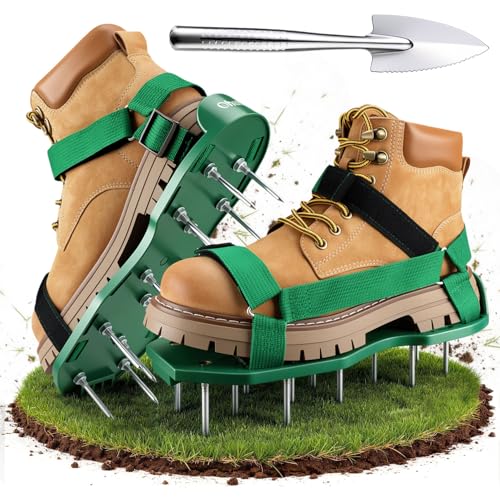
The Ohuhu Lawn Aerator Shoes are strap-on spiked sandals that turn a walk across the lawn into an aeration session. Each shoe has stainless steel spikes on the sole, adjustable hook-and-loop straps that fit over ordinary shoes, and a one-size design that suits most adults. A small stainless steel shovel is included for clearing spikes and for light garden work. The shoes arrive pre-assembled, so there is no installation step before use.
These shoes suit small lawns, spot treatment, and homeowners who want the lightest possible approach to aeration. Walking the yard in a steady pattern punches holes across the turf. They are also useful around trees, along paths, and in corners where a long-handled tool is awkward.
Spike shoes have clear limits. The spikes are shorter than those on a dedicated step-on tool, and they do not remove soil plugs, so they will not fix severe compaction on their own. They work best on moist, lightly compacted soil and as a supplement to deeper aeration.
How to choose
Start with soil and compaction. If a screwdriver is hard to push into the ground, if water pools on the surface, or if foot traffic has left bare, hard patches, the lawn likely needs core aeration. A hollow-tine tool that removes plugs is the right choice in that case. If the soil is sandy or loamy, if the lawn is only lightly compacted, or if the goal is routine seasonal loosening, a spike aerator will do the job with less effort.
Match the tool to lawn size next. Manual step-on core tools suit small lawns and patch work, but they are slow across a large yard. A walk-behind spike roller covers ground faster and suits medium lawns. Aerator shoes suit very small areas and spot work. Homeowners with a large lawn who want core aeration may still prefer renting a powered machine once a year, then using a manual tool for touch-ups between rentals.
Check tine depth, handle height, and weight before buying. Longer tines reach deeper roots, and a handle that matches the user height reduces back strain. Aerate when the soil is moist after rain or watering, avoid aerating dry soil, and mark shallow pipes, cables, and sprinkler heads before starting.
Who should skip
Homeowners with a large lawn and severe clay compaction should skip manual tools as the only solution. A step-on core aerator will take many hours to cover a big yard. Renting a powered core aerator once a year is a better fit, with a manual tool kept for spot work afterward.
Anyone with knee, hip, or back trouble should also be cautious with step-on aerators and aerator shoes. Repeated stepping and walking on spiked soles can strain joints, especially on uneven ground. A walk-behind roller involves less bending and may be the gentler option.
Finally, a lawn that is dormant, newly seeded, or stressed by drought should not be aerated until conditions improve. Aerating dry or dormant turf can damage grass that is already struggling. Wait for moist soil and active growth, usually in spring or autumn, and avoid aerating during extreme heat.
FAQ
Is a core aerator better than a spike aerator?
A core aerator is generally better for compacted soil because it removes plugs and creates lasting space for air and water. A spike aerator punches holes without removing soil, which can press clay tighter around the hole. Spike tools still help on sandy soil and lightly compacted lawns.
When is the best time to aerate a lawn?
Spring and autumn are the best seasons, when grass is actively growing and soil is moist. Aerate after rain or watering, when the ground is soft enough for tines to penetrate cleanly. Avoid aerating during drought, extreme heat, or when the lawn is dormant.
How often should a lawn be aerated?
Most home lawns benefit from aeration once a year. Lawns with heavy foot traffic, clay soil, or pets may need aeration twice a year, in spring and autumn. Lightly used lawns on sandy soil may only need aeration every second year.
Should I leave the soil plugs on the lawn?
Yes, leave the plugs on the surface. They break down within a week or two and return nutrients to the soil. Mowing over them helps them crumble faster. Removing them takes nutrients away from the lawn and adds unnecessary work.
Final verdict
The Yard Butler ID-6C is the best starting point for most homeowners because it delivers genuine core aeration in a simple, durable tool that suits small lawns and patch repair. Homeowners with more ground to cover should look at the Landzie 42-inch core tool, while those with lightly compacted lawns will find the Agri-Fab walk-behind spike aerator faster and easier. Choose core aeration for compaction and spike aeration for light loosening.