Key takeaways
- Learn how to choose a garage heater for workshops: electric vs propane, sizing, safety, and five heaters that warm one-car and two-car garages fast.
- Top Pick: Dr. Infrared Salamander Heater DR-PS11524
- Runner-up: Dr. Infrared DR218-3000W Garage Workshop Heater
- Also consider: Fahrenheat FUH54 Electric Garage Heater
A cold garage stops work. Glue will not cure, paint will not dry, fingers go numb, and tools feel like ice. A good garage heater changes that, turning a freezing workspace into a room where winter projects are actually possible. Choosing one is not just about picking the biggest heater on the shelf. Fuel type, power supply, room size, insulation, and safety all shape the right choice, and a heater that is too small will run constantly without ever warming the space. This guide explains how to choose a garage heater and compares five heaters for workshops of different sizes.
As an Amazon Associate, we earn from qualifying purchases.
Quick answer
Start by measuring the garage and checking insulation, then choose electric for steady, fume-free heat or propane for fast heat without a power supply. A 240-volt electric heater suits a two-car garage, while a 120-volt or small propane heater covers a one-car space. Always allow ventilation for fuel-burning heaters and keep clearances around the unit.
Dr. Infrared Salamander Heater DR-PS11524

A 240-volt portable electric heater built for construction sites, workshops, and large garages. It moves a large volume of heated air, has an adjustable thermostat, and rolls on wheels for easy positioning.
The build and controls deserve a closer look. Dr. Infrared Salamander Heater DR-PS11524 is put together for regular use rather than occasional display, with materials and fittings chosen to hold up under the conditions it will actually face. The controls are straightforward, the parts that move do so smoothly, and the overall feel is of a tool that was designed by people who use the category themselves.
What stands out:
- A design that suits everyday use, with controls and fittings that feel made for the job rather than added as an afterthought.
- Solid construction that holds up under regular use in real conditions, whether that means weather, vibration, or daily handling.
- A straightforward setup that most owners can complete without special tools or professional help.
Taken together, Dr. Infrared Salamander Heater DR-PS11524 earns its place in this guide through a solid blend of features, build, and ease of use. It is not the right pick for every situation, but for the use it is designed for, it does the job well and asks little in return.
Dr. Infrared DR218-3000W Garage Workshop Heater

A 3000-watt electric heater designed for garages, greenhouses, and workshops. It covers a medium space, uses a fan to spread heat, and suits owners who want steady electric heat without fuel.
Look closely at how Dr. Infrared DR218-3000W Garage Workshop Heater is built and the design choices make sense. The materials suit the job, the moving parts feel solid, and the controls fall where a user would expect them. It is the kind of product that rewards a careful first setup with steady, predictable performance afterwards.
What stands out:
- A design that suits everyday use, with controls and fittings that feel made for the job rather than added as an afterthought.
- Solid construction that holds up under regular use in real conditions, whether that means weather, vibration, or daily handling.
- A straightforward setup that most owners can complete without special tools or professional help.
In short, Dr. Infrared DR218-3000W Garage Workshop Heater is a dependable choice for the job it is built for. It balances features and usability in a way that suits most buyers, and it holds up well against the other picks in this guide.
Fahrenheat FUH54 Electric Garage Heater
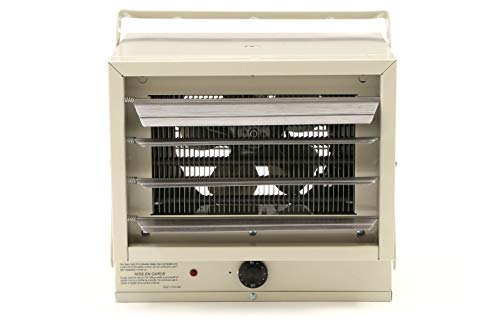
A 240-volt ceiling or wall-mount heater with adjustable louvers that direct warm air where it is needed. It suits permanent installs in two-car garages and workshops.
What sets Fahrenheat FUH54 Electric Garage Heater apart in daily use is how little fuss it creates. Setup is quick, the controls are easy to learn, and the product settles into a routine without demanding attention. That ease of use matters more than any single feature, because a product that is simple to use gets used properly and on time.
What stands out:
- A design that suits everyday use, with controls and fittings that feel made for the job rather than added as an afterthought.
- Solid construction that holds up under regular use in real conditions, whether that means weather, vibration, or daily handling.
- A straightforward setup that most owners can complete without special tools or professional help.
Overall, Fahrenheat FUH54 Electric Garage Heater delivers what it promises without unnecessary complication. It fits the needs of most buyers in this category and stands up well in direct comparison with the alternatives.
Dr. Infrared DR966 Garage Heater

A 240-volt heater with adjustable output from 3000 to 6000 watts, so it can be matched to different garage sizes. A fan spreads heat across the room, and a thermostat dial keeps the temperature steady.
The build and controls deserve a closer look. Dr. Infrared DR966 Garage Heater is put together for regular use rather than occasional display, with materials and fittings chosen to hold up under the conditions it will actually face. The controls are straightforward, the parts that move do so smoothly, and the overall feel is of a tool that was designed by people who use the category themselves.
What stands out:
- A design that suits everyday use, with controls and fittings that feel made for the job rather than added as an afterthought.
- Solid construction that holds up under regular use in real conditions, whether that means weather, vibration, or daily handling.
- A straightforward setup that most owners can complete without special tools or professional help.
Taken together, Dr. Infrared DR966 Garage Heater earns its place in this guide through a solid blend of features, build, and ease of use. It is not the right pick for every situation, but for the use it is designed for, it does the job well and asks little in return.
Dyna-Glo RMC-FA60DGD Propane Forced Air Heater

A propane forced-air heater that warms large spaces fast without a power outlet. It suits big, drafty workshops and job sites, but it needs ventilation because it burns fuel indoors.
Look closely at how Dyna-Glo RMC-FA60DGD Propane Forced Air Heater is built and the design choices make sense. The materials suit the job, the moving parts feel solid, and the controls fall where a user would expect them. It is the kind of product that rewards a careful first setup with steady, predictable performance afterwards.
What stands out:
- A design that suits everyday use, with controls and fittings that feel made for the job rather than added as an afterthought.
- Solid construction that holds up under regular use in real conditions, whether that means weather, vibration, or daily handling.
- A straightforward setup that most owners can complete without special tools or professional help.
In short, Dyna-Glo RMC-FA60DGD Propane Forced Air Heater is a dependable choice for the job it is built for. It balances features and usability in a way that suits most buyers, and it holds up well against the other picks in this guide.
How to choose
Choosing well comes down to matching the product to the job, the space, and the way it will be used. The points below cover the decisions that matter most, and they apply to every product in this guide.
Measure the space first
A heater sized for a one-car garage will struggle in a two-car space. Measure length, width, and ceiling height, and note how well the garage is insulated before choosing wattage.
Pick electric or fuel
Electric heaters add no fumes and suit enclosed garages, but they need the right circuit. Propane and kerosene heaters warm fast and work without power, yet they need ventilation and fuel storage.
Check the power supply
Large electric heaters usually need a 240-volt circuit and hardwiring. Check the breaker panel before buying, since adding a circuit costs extra.
Think about mounting
Ceiling and wall mounts keep floor space clear and spread heat evenly, while portable heaters can be moved to the work area. Choose the style that fits how the garage is used.
Look for safety features
Overheat shutoff, tip-over protection, and a thermostat are worth having. Fuel heaters should also have a flame-out shutoff and clear clearance requirements.
Who should skip
Skip a fuel-burning heater in a tightly sealed garage without ventilation, since exhaust and fumes build up fast. Skip an oversized electric heater if the panel cannot support it, and skip any heater if the garage stores fuel, solvents, or sawdust near the unit. In those cases, improve insulation first, then size a heater to the improved space.
FAQ
What size garage heater do I need?
As a rough guide, an insulated one-car garage needs around 3000 to 5000 watts of electric heat, while a two-car garage needs 5000 to 7500 watts. Poor insulation, high ceilings, and cold climates push the number higher.
Are electric garage heaters safe to leave running?
Electric heaters with overheat protection and a thermostat are safe for attended use, but they should not be left running unattended. Keep flammable materials clear and check the cord and plug regularly.
Can I use a propane heater in my garage?
Yes, with ventilation. Propane heaters burn fuel and produce exhaust, so the garage needs fresh air coming in. Never run one in a sealed room, and keep a carbon monoxide alarm in the space.
Do garage heaters work in uninsulated garages?
They work, but much of the heat escapes through walls and doors. Insulating the door, sealing gaps, and adding weather stripping make any heater far more effective and cheaper to run.
Final verdict
For a two-car workshop, a hardwired 240-volt electric heater such as the Dr. Infrared DR966 or Fahrenheat FUH54 gives steady, fume-free heat. For fast heat in a large or drafty space, the Dyna-Glo propane heater delivers, with ventilation. Measure the garage, check the power supply, and size the heater to the real space.