Key takeaways
- Learn how to choose a hand saw for woodworking and DIY cuts, from crosscut and rip saws to dovetail, coping and Japanese pull saws, plus five solid picks.
- Top Pick: STANLEY SharpTooth 15-Inch Hand Saw (20-526)
- Runner-up: STANLEY FATMAX 15-Inch Hand Saw (20-045)
- Also consider: SUIZAN Ryoba Double Edge Saw 9.5-Inch
A hand saw is one of the simplest tools in a workshop, and also one of the most useful. It needs no power cord, no battery, and no setup time. For trimming a board or cutting a dowel flush, it is often faster than a power saw. Each shape suits a different kind of cut. A saw that rips a board along the grain will not leave a clean edge across the grain, and a fine dovetail saw is the wrong tool for rough framing lumber. This guide explains the main types, the features that matter, and five solid saws sold on Amazon that cover most woodworking and DIY jobs around the home.
As an Amazon Associate, we earn from qualifying purchases.
Quick answer
Match the saw to the cut. Use a crosscut saw for cutting across the grain, a rip saw for cutting with the grain, a dovetail saw for fine joints, a coping saw for curves and trim, and a Japanese pull saw for clean, controlled cuts on the pull stroke. Check blade length, teeth per inch, and handle comfort before buying, and keep the blade clean and dry.
1. STANLEY SharpTooth 15-Inch Hand Saw (20-526)

The STANLEY SharpTooth 15-inch saw is a practical first hand saw for general DIY work. Its 15-inch blade is long enough to cut through standard framing lumber and shelving boards in a few strokes, yet short enough to control easily in tight spaces. The SharpTooth design uses teeth with three cutting surfaces, which helps the blade move through softwood and hardwood with less effort than a conventional tooth pattern. The tooth count of 12 points per inch sits in the middle of the range, giving a balance between cutting speed and a reasonably smooth edge.
The wooden handle suits a full grip, and the induction-hardened teeth stay sharp longer than untreated teeth. This saw works well for crosscuts across the grain, which covers most of the cutting a DIYer does: trimming studs, cutting deck boards, shortening a shelf, or cutting plywood panels to size. It is a general-purpose saw rather than a specialist, so it will not produce the fine finish of a dovetail saw, but for rough and medium work it is dependable.
2. STANLEY FATMAX 15-Inch Hand Saw (20-045)

The STANLEY FATMAX 15-inch saw is built for the same kind of general cutting as the SharpTooth model, with a tougher frame and a grip aimed at heavy use. Its 15-inch blade handles boards, plywood, and plastic pipe, and the tooth geometry is designed for fast cutting on the push stroke. The handle uses a two-material design with a soft grip section, which reduces slipping when hands are dusty or damp, a common situation on a building site or in a garage workshop.
Its slightly thicker blade resists bending when a board pinches the blade in a deep cut. The FATMAX saw suits anyone who wants one hard-working saw for cutting lumber, trimming branches, and general repair work around the house. It is not a fine joinery saw, and the cut edge will need sanding before a visible joint, but for framing, fencing, and rough carpentry it earns its place.
3. SUIZAN Ryoba Double Edge Saw 9.5-Inch

The SUIZAN Ryoba is a Japanese pull saw, and it cuts on the pull stroke rather than the push stroke. That single difference changes how the saw feels. Because the blade is pulled taut during the cut, it can be thinner than a Western saw blade, and a thinner blade leaves a narrower kerf and a cleaner edge. The Ryoba has two cutting edges on one blade: one side has rip teeth for cutting with the grain, and the other side has crosscut teeth for cutting across it. In effect, one tool covers two jobs.
The 9.5-inch blade suits small and medium workpieces, from trimming tenons to cutting dowels, battens, and thin boards. The rattan-wrapped handle gives a secure grip, and the blade is replaceable. The thin blade tracks a marked line well, and the saw is quiet and precise. For fine woodworking, furniture repair, and model work, the Ryoba is one of the most versatile hand saws available.
4. SUIZAN Dozuki Dovetail Saw 9.5-Inch
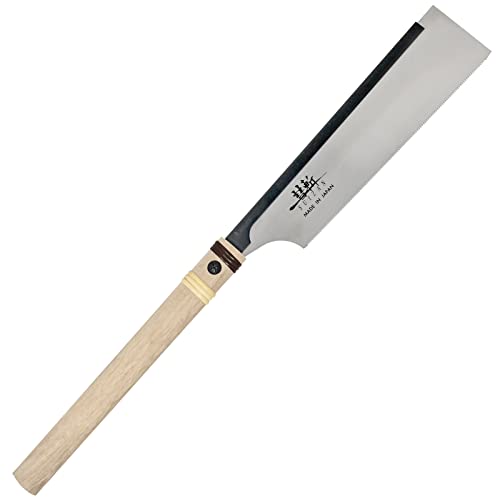
The SUIZAN Dozuki is the specialist of this list, made for dovetails, tenons, and other fine joints where the cut must land exactly on a line. A Dozuki is a Japanese backsaw: a steel spine runs along the top of the blade, keeping the thin blade rigid and straight while it cuts. The blade on this model is 9.5 inches long with fine crosscut teeth, and the kerf is very narrow, which matters when fitting joints that should close without gaps.
Dovetail work demands a saw that starts easily and follows a line without wandering. The Dozuki cuts on the pull stroke, so the blade stays in tension and the user can steer with light pressure. This saw is not meant for rough lumber or long rips; its fine teeth cut slowly in thick stock, and forcing it will bend the blade. Used for its intended purpose, it produces crisp shoulders on tenons and clean baselines on dovetails.
5. IRWIN ProTouch Coping Saw (2014400)

The IRWIN ProTouch coping saw handles the cuts the other saws on this list cannot: curves, tight turns, and interior cutouts. A coping saw uses a thin, narrow blade stretched in a deep steel frame, and the blade can rotate a full circle, which lets the user follow a curved line in any direction. This makes it the right tool for cutting coped joints in skirting and crown molding, where one piece of trim must fit the profile of another, and for cutting curved shapes in thin boards.
The ProTouch model has a flat-bar steel frame that holds the blade under good tension, which reduces chatter and keeps the cut smooth. Its handle is shaped for comfort during long sessions, and the blade is made from high-speed steel with 17 teeth per inch, a fine count that suits trim work and leaves a clean edge. Use a light touch and a steady pace, since the thin blade can snap if twisted. For trim carpentry, scroll work, and cutting out waste from dovetails, it is an inexpensive tool that earns its keep.
How to choose
Start with the cuts you make most often. If most of your work is cutting boards to length, a 15-inch crosscut saw is the right starting point. If you cut along the grain, for example ripping a wide board into narrower strips, look for a rip saw or a Ryoba with a rip edge. Fine joinery calls for a dovetail saw, and curved work calls for a coping saw. Many woodworkers end up owning three saws: a general crosscut saw, a dovetail saw, and a coping saw.
Blade length matters. A longer blade cuts faster but is harder to control in small work; a 15-inch blade suits general work, while a 9.5-inch blade suits joinery. Teeth per inch, often written as TPI, controls the finish. Fewer teeth cut faster and leave a rougher edge, while more teeth cut slower and leave a smoother edge. Around 8 to 12 TPI suits general carpentry, while 15 TPI and above suits fine joints and trim.
Tooth shape is the next detail. Crosscut teeth are filed to slice across wood fibers, while rip teeth act like small chisels that sever fibers along the grain. Using the wrong tooth shape makes cutting harder and the edge rougher. Handle comfort deserves attention too, because a saw that hurts the hand will not be used. Finally, check whether the blade is replaceable, which costs less over time than replacing the whole tool.
Who should skip
If you regularly cut thick hardwood, sheet goods in large volumes, or long rip cuts, a circular saw or table saw will save time and effort, and a hand saw will feel slow by comparison. People with limited hand strength or wrist problems may also find hand sawing tiring, and a powered saw with a guide is a kinder option. A coping saw and a dovetail saw are specialists, so anyone who only cuts the occasional board for a repair has little need for them; one general crosscut saw covers that work. Finally, if you need perfectly straight, repeatable cuts in many identical pieces, a power saw with a fence gives more consistent results than a hand saw ever will.
FAQ
What teeth per inch should I choose for general DIY work?
A tooth count of 8 to 12 points per inch is a good middle ground for general DIY work. It cuts fast enough for framing lumber and shelving boards while leaving an edge that needs only light sanding.
Can one hand saw do everything?
One general crosscut saw can handle most straight cuts, but it will not do fine joinery or curves well. A crosscut saw leaves a rougher edge than a dovetail saw, and its wide blade cannot turn through a curve.
How do I keep a hand saw cutting well?
Keep the blade clean, dry, and protected. Wipe off sawdust and resin after use, and store the saw where the teeth cannot strike other tools. Replace the blade when teeth dull, or have a Western saw sharpened by a saw doctor if it is a quality tool.
What is the difference between a rip saw and a crosscut saw?
A rip saw cuts with the grain, and its teeth act like chisels that pare away wood fibers along their length. A crosscut saw cuts across the grain, and its teeth act like small knives that slice fibers. Rip teeth are usually larger and fewer per inch, while crosscut teeth are smaller and more numerous.
Final verdict
Choosing a hand saw comes down to matching the tool to the cut. Start with a general 15-inch crosscut saw for boards and framing, add a Japanese pull saw or a dovetail saw when fine work begins, and keep a coping saw for curves and trim. The five saws in this guide cover the full range from rough DIY cuts to fine joinery, and any one of them is a sound place to start.