Key takeaways
- Choose a garden tiller or cultivator for raised beds and home plots by power source, tilling width, depth and soil, with five listed picks compared.
Breaking ground by fork and spade is slow work, and keeping raised beds and vegetable rows loose through the season is slower still. A home-garden tiller or cultivator does that turning, mixing and weeding in passes, at a size and weight one person can handle and store in a shed corner. The home market is dominated by corded electric models, a smaller group of cordless battery models, and compact gas machines for larger or tougher plots.
The right choice depends on three things: how far the beds sit from an outlet, how wide and deep the machine needs to work, and whether the soil is loose bed mix or heavier native ground. This guide compares five current Amazon-listed models across those power types, from wide corded tillers for open plots to a narrow cordless cultivator for raised beds and a compact gas tiller for cord-free work.
As an Amazon Associate, we earn from qualifying purchases.
Quick answer
For most home gardens near an outlet, a corded electric tiller around sixteen inches wide covers open beds and small plots with steady power and little upkeep. Raised beds and tight rows suit a narrower cultivator, corded or cordless, that can turn without striking bed walls. Choose gas only when beds sit far from power and soil is heavy enough to stall a small electric motor.
Sun Joe TJ604E Electric Garden Tiller and Cultivator

The Sun Joe TJ604E is the widest and strongest corded option in this guide. Its 13.5-amp motor drives six steel tines at a listed 370 rpm, cultivating sixteen inches wide and up to eight inches deep in a single pass. A three-position wheel adjustment changes transport and working depth, the handle folds for storage, and an instant-start safety switch replaces any pull cord. For a home plot of open beds, that width shortens the job, and the depth suits mixing compost and amendments through the full root zone of most vegetables.
Corded power brings steady output with no battery to fade and no fuel to store, at the cost of managing an outdoor-rated extension cord sized for the motor draw. The working style is to make overlapping passes and let the tines pull the machine forward gently rather than forcing it down, especially in soil that has not been turned for a season. Weight is moderate for a machine of this width, and the folding handle helps it store flat against a wall. For beds within cord reach, the TJ604E is the full-width example of this class.
Earthwise TC70016 Corded Electric Tiller and Cultivator

The Earthwise TC70016 matches the Sun Joe on headline power, with a 13.5-amp motor, and adds a useful adjustment the fixed-width machines lack. Its six tines can be set to till eleven inches or sixteen inches wide, with a working depth of up to eight inches, so the same machine can open a full bed at the wide setting and then cultivate between established rows at the narrow setting. Push-button start, a cord retention hook and flip-down transport wheels round out a design aimed at ordinary home plots.
That adjustable width is the reason to pick this model over a fixed sixteen-inch machine. Vegetable gardens change shape through the season, and a tiller that narrows down earns its keep in midsummer weeding passes where a wide machine would damage stems and roots. The cord retention hook also matters in practice, because a cord that unplugs mid-row or drifts into the tine path is the most common annoyance of corded tilling. Plan the work pattern so the cord trails behind, and size the extension cord for the full motor load. For mixed beds and rows, this is the most flexible corded pick in the guide.
Earthwise TC70001 Corded Electric Tiller and Cultivator

The Earthwise TC70001 is the narrow corded option, built around an 8.5-amp motor and an eleven-inch working width with four tines and a depth of up to eight inches. That smaller footprint suits raised beds, borders and closely spaced rows where the sixteen-inch machines feel clumsy. An ergonomic soft-grip handle and a cord retention hook carry over from the larger Earthwise design, and the lower motor draw makes long extension runs less demanding, which helps when beds sit at the far end of a yard.
The trade-off is pace and bite. Eleven inches covers open ground more slowly, and the smaller motor asks for shallower passes in compacted soil rather than one deep plunge. In loose raised-bed mix, neither limit matters much, and the narrow width becomes an advantage every pass. It also works well as a second machine alongside a wider tiller, handling in-season cultivating while the big machine does spring preparation. Gardeners who mostly grow in raised beds can reasonably choose this size as their only machine.
Greenworks 40V Cordless Tiller and Cultivator 27062

The Greenworks 27062 removes the cord entirely. It runs on the Greenworks 40V battery platform and is listed with a 4.0Ah battery and charger included, four eight-inch tines, and an adjustable tilling width from eight and a quarter inches to ten inches. Rear wheels of six inches help move it between beds, and stated runtime runs up to about forty-five minutes on a charge, depending on soil resistance. Tilling depth is shallower than the corded machines, at up to five inches, which frames it as a cultivator for worked soil rather than a groundbreaker.
That profile fits raised beds well. Bed mix is loose, areas are small, and a cord in a boxed bed is a constant snag, so a light machine that lifts in and out earns its place. It also suits gardeners who already own Greenworks 40V tools and can rotate batteries. The limits to accept are runtime and depth. A long session of first-time tilling in heavy soil will drain a battery and strain a compact cultivator, so larger plots still belong to corded or gas machines. For bed maintenance, weeding passes and small kitchen gardens, the freedom from cord and fuel is a genuine daily convenience.
Mantis 7940 Four-Cycle Tiller and Cultivator
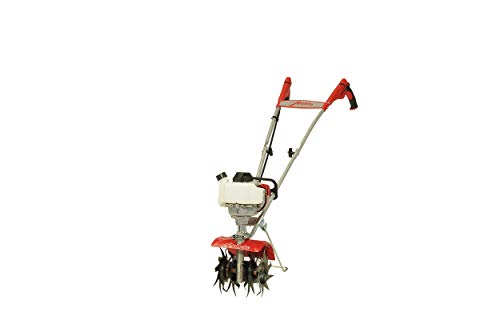
The Mantis 7940 is the gas option, and it takes a different approach to size. A 25cc Honda four-cycle engine drives narrow serpentine tines over a nine-inch path, and the whole machine weighs about twenty-four pounds, light enough to carry to the bed rather than wheel. Because it is a four-cycle engine, it runs on straight gasoline with no fuel mixing. The narrow tines can work deep in loose soil, and folding handles help with storage and transport.
A narrow gas tiller suits gardeners with no outdoor outlet near the beds, larger allotments, or soil that needs repeated deep passes in one session without waiting on a battery. It also works well for edging, trenching for bulbs and beans, and refreshing long rows. The costs are the usual gas ones: fuel storage, engine oil, air filter and spark plug care, noise, and cold-start attention after winter storage. None of that is difficult, but it is steady upkeep that electric models avoid. For a big home plot worked often and hard, the Mantis format remains the cord-free, time-unlimited choice in this lineup.
How to choose
Match the power source to distance first. Beds within comfortable extension-cord reach of an outdoor outlet suit corded models, which deliver full power for as long as the job takes and need the least upkeep. Beds scattered around a larger yard suit cordless or gas, with cordless best for short, frequent cultivating sessions and gas best for long sessions and heavy soil.
Match width to the beds next. Measure the narrowest space the machine must work, such as the inside width of raised beds and the spacing between rows at midseason. A machine wider than that space will sit unused for half the season. Adjustable-width models bridge the gap, while a fixed narrow cultivator is the honest choice for bed-only gardening.
Then consider depth and soil honestly. Loose, compost-rich bed soil needs little depth or power, and a compact cultivator handles it easily. Unturned native soil, clay or ground full of roots needs the strongest motor available, shallow repeated passes, and realistic expectations, because no home tiller in this class turns hardpan in one pass. Check tine count and construction, handle comfort and folding for storage, transport wheels, and the weight of the machine when carried, not just when pushed. Finally, think about upkeep. Electric models store clean and start on a switch. Gas models need fuel care and seasonal servicing.
Who should skip
Skip a tiller altogether when the garden is a few small beds that a fork turns in an hour, or when a no-dig approach with surface compost already produces good results. Skip wide corded models when beds are narrow boxes or sit far from any outlet, and skip cordless models when the main job is breaking new ground each spring, because runtime and shallow depth will frustrate that work. Skip gas when storage space is tight, when fuel handling is unwelcome, or when the machine will run only once or twice a year, since infrequent use is hardest on small engines. Gardeners with very large or very stony plots should also skip this whole home-garden class and look at rear-tine machines built for that scale.
FAQ
What is the difference between a tiller and a cultivator?
The terms overlap, and many home models carry both names. In general, a tiller is built to turn soil deeper and break new or compacted ground, while a cultivator is lighter and made for loosening already-worked soil, mixing in amendments and weeding between rows. Width, depth and motor size on the listing tell more than the label.
Can an electric tiller handle clay soil?
A strong corded model can work clay that is moist but not wet, using shallow passes that deepen gradually. Dry, hard clay will bounce any light machine, and saturated clay will clog the tines. Working after rain has soaked in, adding organic matter over several seasons, and avoiding one deep pass all make the job manageable.
How deep should a home garden be tilled?
Most vegetables root well in soil loosened to about six to eight inches, which is within the stated depth of the corded and gas models here. Tilling deeper than the crop needs wastes effort and can bring buried weed seed to the surface.
Is a cordless cultivator enough for raised beds?
For beds filled with loose mix, yes, provided the work is maintenance rather than first-time breaking. The Greenworks model in this guide adjusts to a bed-friendly width and runs long enough for a typical set of home beds in one session. Keep expectations to cultivating depth, and turn new bed fill by fork first if it arrives compacted.
Final verdict
Most home gardeners should start corded. The Sun Joe TJ604E covers open plots at full width, the Earthwise TC70016 adds adjustable width for beds and rows in one machine, and the Earthwise TC70001 narrows the format for raised beds and borders. Choose the Greenworks 27062 when a cord will not reach or will not behave in boxed beds, and choose the Mantis 7940 when distance, session length or soil weight rules out electric power. Measured against bed size, outlet distance and soil type, one of these five formats will fit nearly any home garden.