Key takeaways
- Learn how to choose a track saw for splinter-free sheet goods work, comparing corded and cordless models, rail systems, blade size and dust collection.
A track saw turns sheet goods work from a wrestling match into a measuring exercise: the saw rides a guide rail, so plywood, MDF and melamine come off the sheet with straight, splinter-free edges that need no cleanup. Choosing one is less about raw power than about the rail system you are buying into, whether you want a cord, and how the saw handles bevels, dust and depth settings. This guide walks through the five track saw setups most worth considering, from a corded cabinet-shop favorite to a premium cordless model, and explains the decisions that matter before you commit to a system, because rails, clamps and connectors are rarely interchangeable between brands.
As an Amazon Associate, we earn from qualifying purchases.
Quick answer
Choose a track saw by rail system first, power source second. The Makita SP6000J1 is the dependable corded benchmark, the DEWALT DCS520B frees 20V MAX users from the cord, the WEN CT1065 is the low-commitment entry, the Festool TSC 55 is the premium cordless option, and the Kreg ACS2000 bundles saw and track for sheet goods.
Makita SP6000J1 6-1/2 Inch Plunge Circular Saw with Guide Rail
The Makita SP6000J1 is the corded track saw that set the template for the category: a 12 amp motor with electronic speed control, a 6-1/2 inch blade, and a 55 inch guide rail included in the box. It plunges smoothly, bevels from a slight negative angle to 48 degrees, and cuts within a fraction of an inch of a wall thanks to its flat housing design. Depth stops and a scoring feature that makes a shallow first pass help produce chip-free edges in melamine and veneered plywood.
Makita’s rail ecosystem is the other half of the appeal. The SP6000J1 runs on Makita rails, and those rails also fit a wide range of other saws and routers with adapters, so the track you buy today keeps working as your kit grows. Corded power means unlimited runtime and consistent torque in thick hardwood plywood. For a home shop that breaks down sheets at a bench or on a foam board on the floor, this remains the reference point against which other track saws are judged.
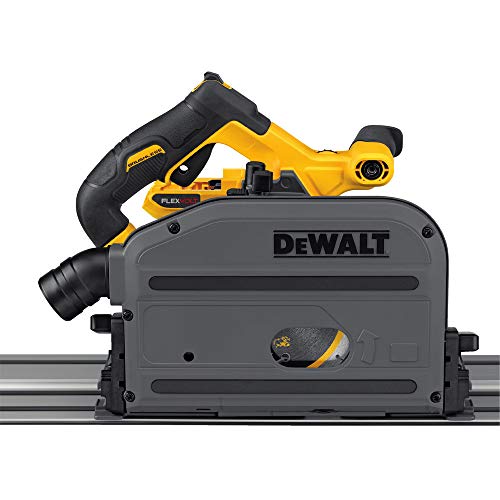
DEWALT DCS520B 20V MAX XR 6-1/2 Inch Track Saw
The DCS520B brings DEWALT’s 20V MAX XR platform to track work with a brushless motor, a 6-1/2 inch blade and a straight-plunge mechanism that keeps the blade path predictable. It runs on DEWALT track saw rails, includes an anti-kickback catch that helps the saw stay engaged with the rail, and offers tool-free depth and bevel adjustments with a variable speed dial for different materials. The dust port rotates to keep the hose clear of the cut line.
For builders already invested in 20V MAX batteries, this saw removes the cord from site work, stairwell cuts and rooftop sheet trimming where dragging an extension lead is a genuine nuisance. Runtime on large FlexVolt batteries covers a full day of typical breakdown work, and the saw pairs with DEWALT’s rail clamps and connectors for longer rips. It is sold as a bare tool, and DEWALT rails are a separate purchase, so factor the full system cost rather than the saw alone when comparing against corded kits that include a rail.
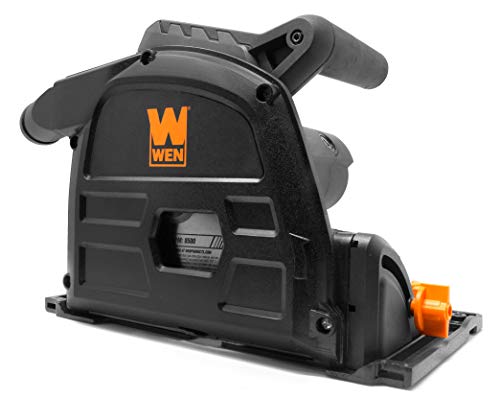
WEN CT1065 10-Amp 6.5-Inch Plunge Cut Track Saw
The WEN CT1065 is the accessible way into track sawing: a corded 10 amp plunge saw with a 6-1/2 inch blade that rides on WEN’s own guide rails, which are sold in affordable sections that join together for long cuts. It bevels to 45 degrees, offers variable speed for plastics and sheet metals with the right blade, and includes the anti-splinter features that make track saws worthwhile, such as a riving knife style guard behavior and a dust port for a shop vacuum.
Expect a less refined feel than the Makita or Festool: the plunge action and adjustments are simpler, and the rail system is proprietary to WEN, so you are buying into a smaller ecosystem. For a homeowner who breaks down a few sheets per project and wants clean edges without a table saw upgrade, that trade is sensible. The CT1065 proves the core concept at the lowest commitment in this guide, and many owners later move up a tier knowing exactly which features they missed.
Festool TSC 55 KEBI-F-Plus Cordless Plunge-Cut Saw

The TSC 55 is the premium cordless entry: a dual-battery 18V system driving a thin-kerf 160 mm blade, with Festool’s splinter guard system producing clean cuts on both sides of the blade, an angle range that covers undercuts, and a FastFix blade change that needs no tools. Its kickback stop halts the blade rapidly if the saw lifts, and the dust extraction through the rotating port is among the most effective in the category when paired with a Festool extractor.
Festool’s FS guide rails are the industry’s most copied standard, and the TSC 55 sits in a deep accessory system of clamps, connectors, angle units and storage. The Plus configuration centers on the saw with batteries and chargers in a Systainer; the guide rail is a separate purchase, which surprises some buyers, so confirm what your chosen kit includes. For professionals who cut sheet goods daily and value edge quality that goes straight to assembly, this is the saw the others are measured against.
Kreg ACS2000 Adaptive Cutting System Saw and Guide Track Kit
Kreg’s ACS2000 takes a different route: a corded plunge saw and a 62 inch guide track designed as one system, with the longest standard track in its class so full crosscuts and most rips happen without joining rail sections. The saw offers a 12 amp motor, anti-chip strip protection on the rail, a riving knife and a depth control designed around sheet goods work. The track’s Versa-Stops and measuring features align with Kreg’s Project Table for repeatable cuts.
The ACS2000 suits woodworkers whose track saw work is almost entirely plywood and panel processing in the shop, especially those already using Kreg joinery products. Its track is not cross-compatible with Makita or Festool rails, which matters if you plan to add a track-guided router later. As a self-contained kit that arrives ready to cut accurately, though, it is coherent and capable, and the long single rail avoids the alignment checks that joined rails demand on every setup.
How to choose
Decide the rail question first, because the rail is the system. Makita-pattern rails have the widest cross-brand support; Festool rails anchor the deepest accessory range; DEWALT, WEN and Kreg rails commit you to one brand’s ecosystem. Second, pick power: corded saws cost less, run indefinitely and weigh less in the hand, while cordless models earn their keep on site work and quick setups. Third, check blade size and cut depth against your thickest material; most 6-1/2 inch class saws handle two layers of plywood and solid doors. Fourth, look at splinter control: a replaceable splinter guard, a scoring mode and an anti-chip strip on the rail separate glue-ready edges from edges that need sanding. Fifth, consider dust extraction, since sheet goods produce fine dust and every saw here improves dramatically with a vacuum attached. Finally, price the complete kit: saw, rail length you actually need, clamps and a spare blade.
Who should skip
Skip track saws if your cutting is mostly dimensional lumber and framing, where a standard circular saw with a straightedge guide does the same work for less money. Skip them if you already own a cabinet table saw with a good fence and a sled, and your sheets are few, because the table saw covers that ground. Skip the premium cordless tier if your saw will live in one shop with power at the bench, where a corded model delivers the same cut quality for years. And skip buying the shortest rail to save money: a rail that cannot span your typical sheet forces joined-rail setups that erase the speed advantage you paid for.
FAQ
Can a track saw replace a table saw?
For breaking down sheet goods and making straight rip and crosscuts, largely yes, and with safer handling of full sheets. A table saw still wins for narrow rips, repetitive small parts, dado work and joinery cuts. Many shops run both: the track saw reduces sheets to manageable sizes, and the table saw finishes them.
What rail length do I need?
Match the rail to your longest common cut plus overhang at both ends for the plunge. A rail around 55 inches covers crosscuts on standard sheets; ripping a full sheet lengthwise calls for roughly double that, achieved by joining two rails with connectors and checking alignment before cutting.
Do track saws cut on both sides cleanly?
The rail side of the cut is protected by the rail’s splinter guard and anti-chip strip, giving a clean edge. The offcut side depends on the saw’s own splinter guard; models with a press-down guard or scoring pass produce the cleanest results on both faces of melamine and veneer.
Are blades interchangeable between brands?
Only within the same blade diameter and arbor size, and thin-kerf cordless saws are tuned for specific blades. Using the blade geometry the manufacturer recommends preserves cut quality and battery runtime. Keep a high tooth count blade for sheet goods and a general purpose blade for solid stock.
Final verdict
For most home workshops, the Makita SP6000J1 is the track saw to buy: proven, corded, and bundled with its rail. DEWALT’s DCS520B is the pick inside the 20V MAX system, the Festool TSC 55 serves professionals who want the best cordless cut quality, the Kreg ACS2000 offers a coherent long-rail kit, and the WEN CT1065 is the honest budget entry. Choose the rail ecosystem you can live with, and every saw here will cut straighter than a freehand circular saw ever will.