Key takeaways
- Compare four pro-grade lawn mowers for large yards, with deck size, engine, transmission and cutting height from Amazon listings to match your workload.
A pro lawn mower is bought for hours, not for weekends. Residential mowers can handle a weekly cut on a tidy lawn, but they wear faster when the grass is thick, the ground is uneven, or the same machine must cover several acres every week. Professional-grade mowers use stronger decks, larger engines, heavier transmissions and wider cutting widths, so they hold blade speed and steering control through long sessions. The real decision is therefore about workload: how much ground, how often, and how rough the terrain is.
This guide is for owners of large properties, small landscaping crews, and homeowners who mow several acres and want commercial build quality. It also suits buyers replacing a residential mower that struggled with thick growth or long runs. Each pick below comes from the name and specifications shown on its Amazon product page, including deck size, engine, drive type and cutting height. Use those figures to match the mower to the property, rather than choosing on brand alone.
Quick Picks
As an Amazon Associate we earn from qualifying purchases
| Product | Best for | Key spec from title |
|---|---|---|
| Husqvarna MZ61 61 in. 24 HP Kawasaki Zero Turn Lawn Mower w/ROPS | Very large properties and long commercial-style sessions | 61-inch deck, 24 HP Kawasaki engine |
| Husqvarna Z254F 54 in. 23 HP Kawasaki Zero Hydrostatic Turn Riding Mower | Large residential lawns that need pro-level cutting speed | 54-inch deck, 23 HP Kawasaki engine |
| Husqvarna Z242F Special Edition 42 in. Zero Turn Mower | Smaller pro jobs with gates, trees and tight turns | 42-inch fabricated deck, 21.5 HP Kawasaki engine |
| Husqvarna TS 354XD 24 HP 54 in. Deck Garden Tractor | Rough ground where a locking differential helps traction | 54-inch fabricated deck, 24 HP engine |
How to Choose
Workload and deck width
Workload decides deck width more than lawn size alone. A mower that cuts three acres once a week needs a wider deck than one that cuts the same area twice a week, because each pass must remove more growth. A 42-inch deck suits smaller jobs and properties with many obstacles, while a 54-inch deck covers large residential lawns in fewer laps. A 61-inch deck is for wide open ground where turning space is generous. Count the weekly hours as well as the acres, because a machine that saves an hour each week pays back its size quickly.
Engine and transmission strength
Pro use puts sustained load on the engine and transmission, so both need headroom. A V-twin engine holds speed better in thick grass than a single-cylinder engine of similar horsepower, and listed displacement helps compare engines when horsepower figures look close. Hydrostatic transmission gives smooth speed changes without gear shifting, and dual hydrostatic drives give better control on slopes and around obstacles. Check the transmission type in the listing, because a weak drive will show its limits long before the engine does.
Deck build and blade system
Deck build decides how long a pro mower lasts on rough ground. Fabricated decks are welded from steel plates and resist dents better than stamped decks, while a thicker deck shell holds its shape around rocks and roots. Three blades spread the load across wide decks, and anti-scalp wheels keep the deck from digging into high spots. Look for the deck material, blade count and cutting height range in the listing, and confirm whether the deck shell has a separate warranty from the engine and frame.
Traction, comfort and service access
Long sessions make traction and comfort practical, not optional. A locking differential helps a garden tractor keep moving when one wheel loses grip on damp or uneven ground, while wide rear tyres reduce rutting on soft turf. Seat support, steering lever feel and cup holders matter when the operator sits for hours, and easy access to the engine, deck and belts shortens maintenance. Fuel capacity also counts, because a large tank lets a wide deck finish a property without stopping to refuel.
The 4 Best Options
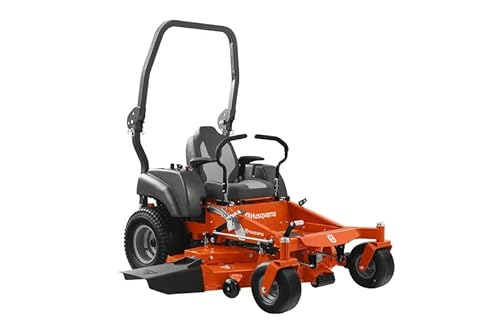
Husqvarna MZ61 61 in. 24 HP Kawasaki Zero Turn Lawn Mower w/ROPS
This is the most commercial pick in this group, built for large properties and light professional work. The 61-inch fabricated deck cuts a very wide path, and the 24 HP Kawasaki engine keeps three blades turning through dense grass. Hydrostatic zero-turn drive gives fast, precise steering on open ground, and roll-over protection is listed for this model. It suits owners who mow several acres in one session and want the mower to finish quickly without losing cut quality.
Specs
- 61-inch fabricated deck
- 24 HP Kawasaki engine
- Hydrostatic zero-turn drive
- Three-blade cutting system
- Roll-over protection listed
Best for: Very large properties and long mowing sessions where width saves the most time.
Watch out for: Confirm gate, trailer and storage width before ordering, because a 61-inch deck needs far more clearance than a standard riding mower.
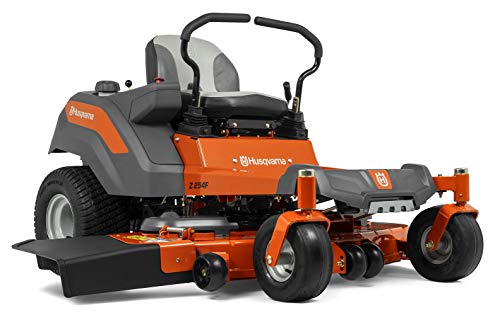
Husqvarna Z254F 54 in. 23 HP Kawasaki Zero Hydrostatic Turn Riding Mower
This zero-turn mower brings pro-style speed to large residential lawns without the size of a full commercial machine. The 54-inch ClearCut deck and 23 HP Kawasaki engine handle thick grass in fewer passes than a narrow mower, and hydrostatic drive keeps steering smooth around trees and beds. Cutting height adjusts from 1.5 to 4 inches, which covers tall spring growth and shorter summer turf. It is a balanced choice for owners who want commercial cutting behaviour on a property of two to three acres.
Specs
- 54-inch ClearCut fabricated deck
- 23 HP Kawasaki engine
- Hydrostatic zero-turn drive
- Cutting height range from 1.5 to 4 inches
- 3.5 gallon fuel capacity
Best for: Large residential lawns where speed, width and cut quality all matter.
Watch out for: Measure the narrowest gate and storage bay, because the 54-inch deck plus discharge chute needs wide clearance.
Husqvarna Z242F Special Edition 42 in. Zero Turn Mower

This mower suits pro work on smaller properties, where a wide deck would be a liability rather than an advantage. The 42-inch fabricated ClearCut deck moves through gates, between trees and around beds with ease, while the 21.5 HP Kawasaki V-twin engine provides steady power for that width. Hydro-Gear EZT transmission keeps speed control simple, and the compact frame is easier to transport and store. It is the right pro pick when the job list includes many small or heavily landscaped lawns.
Specs
- 42-inch fabricated ClearCut deck
- 21.5 HP Kawasaki V-twin engine
- Hydro-Gear EZT transmission
- Cutting height range from 1.5 to 4 inches
- 3.5 gallon fuel capacity
Best for: Smaller properties and landscaped lawns where manoeuvrability matters most.
Watch out for: Check the discharge chute width against gates, because the deck measurement alone does not include the chute.
Husqvarna TS 354XD 24 HP 54 in. Deck Garden Tractor
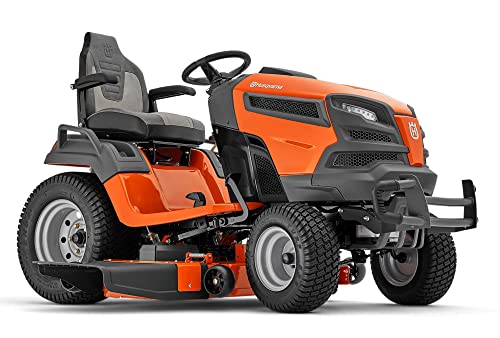
This garden tractor suits rough or uneven ground where a zero-turn mower would struggle for traction. The 54-inch fabricated deck gives wide coverage, and the 24 HP engine supplies power for thick grass and slopes. A locking differential helps the tractor keep moving when one wheel slips, which is useful on damp ground, hills and patchy turf. Steering wheel control also feels familiar to owners moving up from a standard lawn tractor, while the heavy-duty build suits longer ownership.
Specs
- 54-inch fabricated steel deck
- 24 HP engine
- Locking differential listed
- Garden tractor steering wheel control
- Differential lock for traction on uneven ground
Best for: Rough, sloping or uneven ground where traction and tractor steering help.
Watch out for: Confirm that the listing describes the TS 354XD model and differential lock, because similar Husqvarna tractors differ in deck and transmission.
Which One Fits Your Situation
Several acres of open ground every week
Choose the Husqvarna MZ61. Its 61-inch deck and 24 HP Kawasaki engine cover wide areas fastest, and roll-over protection is listed for uneven ground. This is the pick when weekly hours are high and the lawn has few tight obstacles.
Two to three acres with trees and beds
Choose the Husqvarna Z254F. The 54-inch deck cuts large areas quickly, while hydrostatic zero-turn steering stays precise around obstacles. Cutting height from 1.5 to 4 inches also handles seasonal growth changes well.
Many small or heavily landscaped lawns
Choose the Husqvarna Z242F Special Edition. Its 42-inch fabricated deck fits gates and tight turns, and the 21.5 HP Kawasaki engine matches that width. Transport and storage are simpler than with the wider models, which helps on varied job lists.
Rough ground that needs extra traction
Choose the Husqvarna TS 354XD. The locking differential helps on damp or uneven ground, and the 54-inch fabricated deck still covers ground quickly. Tractor steering also suits owners who prefer a steering wheel to lap bars.
Common Mistakes
- Choosing deck width from lawn size alone, without counting weekly hours and grass thickness.
- Buying a residential transmission for daily pro use, then finding it wears out under sustained load.
- Ignoring deck construction, so a stamped deck dents on the same rough ground a fabricated deck would survive.
- Forgetting to measure gates, trailers and storage, which can make a wide mower unusable on some jobs.
- Overlooking fuel capacity and service access, which decide how long a mower can work without stopping.
Frequently Asked Questions
What makes a mower pro-grade rather than residential?
Pro-grade mowers use stronger decks, larger V-twin engines, heavier hydrostatic transmissions and wider cutting widths. Those parts hold blade speed and steering control through long sessions and thick grass. Residential mowers can cut well on tidy lawns, but they wear faster under daily or multi-acre use.
How much deck width do I need for three acres?
A 54-inch deck is a practical match for three acres of mostly open grass, while a 61-inch deck saves more time when the ground is wide and clear. A 42-inch deck will finish the job, but it needs more passes and more hours. Measure gates and storage before choosing the widest option.
Is a zero-turn mower better than a garden tractor for pro work?
A zero-turn mower is faster and more precise on open and landscaped ground, because it turns tightly and covers width quickly. A garden tractor is better on rough or sloping ground where a locking differential and steering wheel give more traction and control. Choose by terrain, not by speed alone.
How often should a pro mower be serviced?
Service intervals follow the engine and transmission guidance in the listing and manual, and heavy use shortens them. Blades, belts, oil and air filters need regular checks, because thick grass and dust wear them faster. Keep the deck clean underneath, since packed clippings reduce airflow and cut quality.