We independently review everything we recommend. When you buy through our links, we may earn a commission. As an Amazon Associate we earn from qualifying purchases.
How Long Will a Smoke Detector Beep Without a Battery?
How long will a smoke detector beep without a battery? We explain why the chirp stops, when to swap the cell, and which 9V packs to keep at home.
The answer is simple: a smoke detector cannot beep at all without a battery. The beep you hear is a low-battery chirp, a short sound the detector makes when the cell inside it runs low, and that chirp needs power to happen. Take the battery out and the chirp stops at once, because nothing is left to drive the sounder. That silence is not a fix, though. A detector without a battery is a detector that cannot warn you about smoke, so the right move is never to leave the battery out. Swap in a fresh 9V cell, and the chirp goes away because the detector has the power it needs again.
Most home detectors run on a single 9V battery, the rectangular cell with snap terminals that has powered smoke alarms for decades. The chirp usually begins when the voltage sags to the point where the detector can no longer trust the cell to run the alarm, and it repeats every minute or so until the battery is changed. The chirp often seems to begin at night, which is not coincidence: cooler night air lowers the voltage of a tired cell just enough to cross the threshold. Sealed detectors with a built-in 10-year cell work differently: when that cell reaches the end of its life, the unit chirps and the whole detector must be replaced, because the cell cannot be swapped. This article explains how the chirp works, how long it lasts, which 9V batteries suit a smoke detector, and why rechargeable 9V cells do not belong in one. The picks are five 9V alkaline packs, and the figures come from the listings themselves. The guidance here is general knowledge about how these detectors and batteries work, not the result of laboratory work.
At a Glance
A smoke detector cannot beep without a battery. Removing the cell silences the chirp at once, and also silences the alarm.
The chirp is a low-battery warning. It repeats every minute or so until the battery is changed.
The chirp often begins at night because cooler air lowers the voltage of a tired cell past the warning threshold.
Most home detectors take a single 9V alkaline battery. Check your detector manual for the exact type it needs.
Never put a rechargeable 9V cell in a smoke detector. Its voltage curve differs from an alkaline cell, and the detector may not warn you properly.
Sealed 10-year detectors chirp at the end of their life and must be replaced as a whole unit.
Keep a spare 9V pack in a drawer so a chirp at night is a five-minute swap, not a trip to the store.
How to Choose
Alkaline or lithium 9V
Most smoke detectors are built around a 9V alkaline cell, and the detector manual usually names alkaline as the type to use. Alkaline 9V cells sag gradually as they age, and that slow sag is what the detector watches for when it decides to chirp. Lithium 9V cells hold their voltage flat for longer and then drop sharply, which can leave less warning time. Some detectors do specify lithium, so the manual is the final word. All five picks in this article are alkaline, which matches the most common guidance.
Shelf life: 5 years or 10 years
A 9V alkaline battery keeps for years on the shelf, and the listings in this article guarantee between 5 and 10 years in storage. The DURNERGY pack guarantees 10 years, while the Amazon Basics, Duracell, and POWEROWL packs guarantee 5 years. A longer guarantee matters when you buy a multi-pack and keep spares in a drawer for years. Check the date on the cell when you install it, and write the install date on the detector so you know when the next swap is due.
Pack size
A 4-pack covers a home with two or three detectors and leaves a spare. A 6-pack or an 8-pack suits a larger home or a household that keeps spares for years. Buying a larger pack only helps if you store the spares properly: a cool, dry drawer, with the terminals covered so the cells cannot short against metal objects. A loose 9V cell in a drawer with keys or coins can short across its snap terminals, so keep the spares in their packaging until you need them.
Never use a rechargeable 9V in a detector
Rechargeable NiMH 9V cells run at a lower nominal voltage than alkaline cells, and their voltage falls differently as they drain. A detector built around an alkaline cell may read a rechargeable cell as low from the start, or may fail to chirp in time when the cell runs down. Detector makers warn against rechargeable cells for this reason. Keep rechargeable 9V cells for toys, microphones, and meters, and keep alkaline cells in your detectors.
Check the detector, not just the battery
A chirp does not always mean a weak battery. Dust in the sensing chamber, a detector past its service life, and a loose battery connection can all cause chirping. Most detectors carry a replace-by date on the back, usually 10 years from manufacture. If a fresh battery does not stop the chirp, check the date, clean the vents gently with a soft brush, and press the battery firmly into the snap terminals. If the chirp continues, replace the detector.
The Amazon Basics four-pack is the baseline pick for a home with a few detectors. Each cell measures 1.04 x 0.69 x 1.91 inches and weighs 1.58 ounces, and the pack carries a 5-year shelf-life guarantee. The cells are single-use alkaline, model 6LR61-4PK, built for smoke and carbon monoxide detectors, radios, and small electronics. A four-pack covers two detectors with a spare each, or one detector with three spares in the drawer. For a household that wants a simple, well-known cell at a modest pack size, this is the straightforward choice.
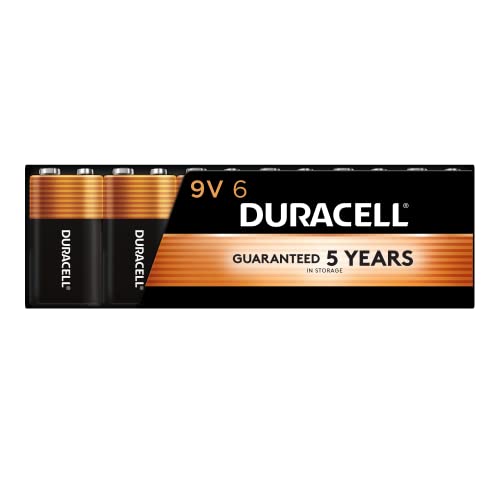
The Duracell Coppertop six-pack is the name-brand pick, and Duracell is the brand most detector manuals were written around. Each cell is a 9V alkaline with a 5-year storage guarantee, and the six-pack weighs 9.9 ounces in total. The listing names smoke detectors, carbon monoxide detectors, toys, remote controls, flashlights, and radios among the uses. A six-pack suits a home with three or four detectors, leaving spares for the drawer. If your detector manual names Duracell by brand, this pack answers that guidance directly.
The POWEROWL eight-pack is the bulk pick, with eight 9V alkaline cells in one pack and a 5-year shelf-life guarantee. The pack weighs 12.7 ounces and measures 4.21 x 3.94 x 0.71 inches. The listing describes the cells as made without mercury or cadmium, and warns that the cells are not rechargeable and must not be recharged. Eight cells cover a larger home with detectors in every bedroom and hallway, with spares left over. Keep the spares in the packaging until you need them, since a loose 9V cell can short against metal objects in a drawer.
The DURNERGY eight-pack is the long-storage pick, with a 10-year shelf-life guarantee that doubles the 5-year guarantee on the other packs here. Each cell measures 1.04 x 1.9 x 0.68 inches, and the pack weighs 12.4 ounces. The listing names smoke alarms, guitar pedals, microphones, and metal detectors among the uses, and describes the cells as alkaline manganese with a 6LR61 format. A 10-year guarantee matters when you buy eight cells and keep half of them in a drawer for years before use. If your home has many detectors and you buy spares in bulk, this is the pack that stays ready the longest.
The EBL four-pack is the newest pick in this article, first listed in January 2026. It holds four 9V alkaline cells in a pack weighing 6.4 ounces and measuring 3.8 x 2.1 x 0.7 inches. The listing names smoke detectors, carbon monoxide detectors, toys, and wireless microphones among the uses. Its shelf-life figure is not stated on the listing, so this article does not quote one; treat it as the pack to check again at the next swap rather than the pack to store for years. For a home that needs four cells now, it covers the job at the same pack size as the Amazon Basics pick.
Comparison Table
Pick
Pack
Chemistry
Shelf-life guarantee
Pack weight
Amazon Basics
4
Alkaline
5 years
1.58 oz per cell
Duracell Coppertop
6
Alkaline
5 years
9.9 oz
POWEROWL
8
Alkaline
5 years
12.7 oz
DURNERGY
8
Alkaline
10 years
12.4 oz
EBL
4
Alkaline
Not stated
6.4 oz
Which One Fits Your Situation
Two or three detectors and a spare each: the Amazon Basics four-pack covers the home at the simplest pack size.
A manual that names Duracell: the Coppertop six-pack answers that guidance directly, with a 5-year storage guarantee.
A larger home with detectors in every room: the POWEROWL eight-pack covers the whole house with spares left over.
Spares that sit in a drawer for years: the DURNERGY eight-pack, with its 10-year guarantee, stays ready the longest.
Four cells needed right now: the EBL four-pack covers the immediate swap, with its shelf-life figure not stated on the listing.
FAQ
How long will a smoke detector beep without a battery?
It will not beep at all. The chirp needs power, and with the battery removed there is no power to drive the sounder. The silence begins the moment the battery comes out. That silence also means the detector cannot warn you about smoke, so never leave a detector without a battery. Put a fresh cell in and the chirp stops because the detector has power again.
How long does the low-battery chirp last?
The chirp repeats every minute or so and can go on for days if the battery is left in place. It stops when you swap in a fresh battery, or when the old cell drains completely. Some detectors chirp for a week or more on a dying cell. The right response is to change the battery on the first chirp, not to wait it out.
Why does the chirp always seem to begin at night?
Cooler night air lowers the voltage of a tired cell just enough to cross the detector’s warning threshold. The cell was already near the end of its life during the day, and the temperature drop at night tips it over. A chirp at 2 a.m. is the most common time to hear one, and it is also the reason to keep a spare pack in a drawer rather than in the garage.
Can I use a rechargeable 9V battery in a smoke detector?
You should not. Rechargeable NiMH 9V cells run at a lower voltage than alkaline cells, and their voltage falls differently as they drain. A detector built around an alkaline cell may misread a rechargeable cell and fail to chirp in time, or may chirp from the moment you install it. Detector makers warn against rechargeable cells for this reason. Use alkaline cells in detectors and save rechargeable cells for toys, microphones, and meters.
What if a fresh battery does not stop the chirp?
Check three things. First, press the battery firmly into the snap terminals; a loose connection chirps like a weak cell. Second, clean the vents gently with a soft brush, since dust in the sensing chamber can cause false chirps. Third, check the replace-by date on the back of the detector. Most detectors last 10 years from manufacture, and a detector past that date chirps even with a fresh battery. If the chirp continues after those checks, replace the detector.
How do sealed 10-year detectors differ?
A sealed detector has a built-in cell that cannot be swapped. It runs for about 10 years, then chirps to signal the end of its life, and the whole unit must be replaced. There is no battery to change. If your detector has no battery door, it is a sealed unit, and a chirp means it is time for a new detector rather than a new battery.
Final Take
A smoke detector without a battery cannot beep, and that silence is the danger, not the solution. The chirp is the detector asking for a fresh cell, and the fix takes five minutes with a spare from the drawer. Among the picks here, the Amazon Basics four-pack is the simplest choice for a small home, the Duracell six-pack suits a manual that names the brand, the POWEROWL eight-pack covers a larger home, the DURNERGY eight-pack stays ready the longest with its 10-year guarantee, and the EBL four-pack covers an immediate swap. Whichever pack you keep, use alkaline cells, never rechargeable ones, and write the install date on the detector so the next chirp never catches you by surprise.
K
Kissmyaster Editorial Team
We compare specs, materials and verified owner reviews before a product earns a spot. Rankings are never paid.
Affiliate disclosure. As an Amazon Associate we earn from qualifying purchases at no extra cost to you. Prices accurate as of the date shown.
Four desktop photo printers compared on ink system, borderless sizes, paper handling and running costs, with fit notes for albums, cards and framed prints.
How much does a battery pack cost? We explain what sets what you pay — capacity, charging speed and cables — and which power banks to keep in your bag.
Does tablet mode save battery? We explain how tablet mode cuts drain on a 2-in-1 laptop, and which USB-C power banks keep a tablet running through the day.

 1. Amazon Basics 9V Alkaline 4-Pack
 2. Duracell Coppertop 9V 6-Pack
 3. POWEROWL 9V Alkaline 8-Pack
 4. DURNERGY 9V Alkaline 8-Pack