
Key takeaways
- Keep hands well clear of the blade path and use clamps or the vise to hold the workpiece. Do not cut short pieces freehand.
- Let the blade reach full speed before lowering it, and wait until it stops before lifting the saw or clearing offcuts.
- Keep blade guards in place and do not defeat safety features, and watch for kickback or binding when the blade is lowered into the workpiece.
- Wear eye and hearing protection and a dust mask.
- Unplug the saw before changing blades or making adjustments, and follow the owner’s manual.
- Support long boards at the same height as the saw table to prevent binding and kickback.
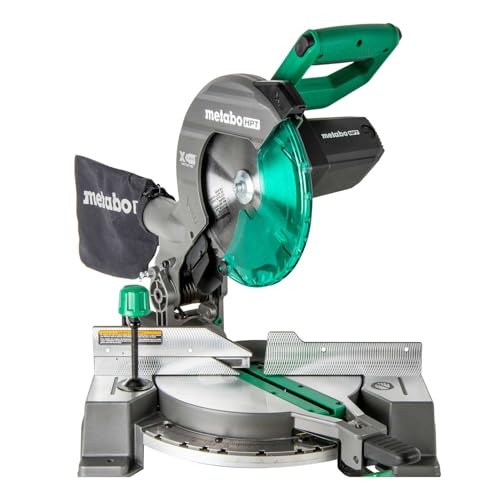
A new corded miter saw for under $150 is realistically limited to a 10-inch single-bevel compound saw such as the Metabo HPT C10FCGS or its sibling C10FCG2, and even those sit at or near the cap depending on the seller. If the budget cannot stretch, a 7-1/4 inch saw or a cordless model is mostly above this tier, so the honest advice is to pick the Metabo HPT for basic trim and framing crosscuts, or to plan on a higher tier if sliding capacity or cordless operation matters.
Our top picks


As an Amazon Associate we earn from qualifying purchases at no extra cost to you.
At a glance
| Model | Type | Stated key specs | Limits | Best for |
|---|---|---|---|---|
| Metabo HPT C10FCGS | 10 in. single-bevel compound, corded | 15 A, 5,000/min, miter 0-52 degrees both ways, bevel 0-45 degrees left, flip fence to 4 in., electric brake; a 5-year warranty is listed | Not a sliding saw; no soft start; weight differs by listing, so confirm on the box | Trim, baseboards, framing crosscuts |
| Metabo HPT C10FCG2 | 10 in. single-bevel compound, corded | Listed with the same miter and bevel ranges plus a shadow line | Availability and price differ by seller; may exceed the cap, so confirm it is still sold | Buyers who want an alignment line |
| Cordless 7-1/4 in. compound saw kits (reviewer-listed) | Cordless | Specs not verified here | Battery platform; reviewers place the price near the cap | Occasional cuts without an outlet |
The Metabo HPT numbers come from the maker’s product literature and are listed differently by some retailers, and these specs could not be re-checked against a current maker page for this write-up, so confirm them on the listing. Cordless saws are mentioned only generally.
What the cap realistically buys
Miter saws divide into non-sliding compound saws, sliding saws, single-bevel and dual-bevel designs. Non-sliding compound saws are the simplest and cheapest, and under this cap they are almost the only option. They cut boards across their width up to the capacity of the blade and fence, so they handle trim, baseboards, 2x4s and 2x6s but not wide boards such as a 2×10 or shelving. Sliding saws extend capacity and typically cost more. Dual-bevel designs tilt both ways and also cost more.
Reviewers repeatedly name 10-inch saws as the realistic budget choice and note that corded 7-1/4 inch saws from some makers sit above this cap. A cordless compact saw adds the cost of the battery and charger.
The picks in detail
Metabo HPT C10FCGS
The maker lists a 10 inch compound saw with a 15 A motor, 120V, a 5,000 per minute no-load speed, and a blade of 10 in. diameter with a 5/8 inch bore. It ships with a 24-tooth carbide-tipped blade, a dust bag, a vise assembly and a hex wrench. The miter range is 0 to 52 degrees left and right with positive stops at 0, 15, 22.5, 31.6 and 45 degrees. The bevel range is 0 to 45 degrees to the left. The fence flips up to 4 inches for taller workpieces.
The manual lists a capacity at 0 degrees miter of 2-5/16 inches high by 5-21/32 inches wide, or 3-1/2 inches high by 3-31/32 inches wide. A nominal 2×6 measures about 1-1/2 by 5-1/2 inches, so by those figures a 2×6 crosscut fits at 90 degrees, but not a board wider than that. The saw has an electric brake, a 6 foot cord and no soft start, and a five-year warranty is listed. The listed weight differs between pages, from roughly 22 to 25 lb, so confirm the figure for the version you buy.
Reviewers call it a leading miter saw near this cap and cite prices that differ between sources, so the price may sit just above or below the cap.
Metabo HPT C10FCG2
This sibling has the same listed miter and bevel ranges (0 to 52 degrees and 0 to 45 degrees left) and adds a shadow line that helps with aligning the cut line without a laser. Reviewers’ prices for it differ, so it may or may not fit under the cap, and model availability changes, so confirm it is still sold. Versions with a laser marker sit in the next tier.
Cordless and 7-1/4 inch options
Reviewers mention cordless 7-1/4 inch compound saws from value platforms such as Ryobi and Craftsman near this cap, and sliding saws above it. Specs for those were not verified for this write-up, so they are mentioned only as alternatives for people who already own the batteries. Check the capacity table before buying, since smaller blades cut less.
What to look for
Blade size and crosscut capacity
A 10 inch blade handles most home jobs. A 7-1/4 inch saw is lighter and cheaper but has less depth and width. Check the capacity table against the largest board you plan to cut.
Miter and bevel range
A 0 to 52 degree miter range and a 45 degree bevel cover trim, crown moulding setups and picture frames. A single bevel means you flip the workpiece for opposite angles, which is fine for most home work.
Positive stops
Positive stops at common angles such as 22.5 and 45 degrees speed up repeat cuts. The Metabo HPT lists stops at 0, 15, 22.5, 31.6 and 45 degrees.
Blade quality
A 24-tooth blade is a rough blade suited to framing. For trim, moulding and finish work, a blade with more teeth gives cleaner cuts and is usually a worthwhile first upgrade.
Weight and portability
Saws around 22 to 25 lb can be moved by one person but are awkward on stairs. Stands and a stable bench add cost.
Dust collection
A dust bag catches some dust, but a vacuum hookup or a dust-extraction setup does more. Wear a dust mask regardless.
Safety notes
- Keep hands well clear of the blade path and use clamps or the vise to hold the workpiece. Do not cut short pieces freehand.
- Let the blade reach full speed before lowering it, and wait until it stops before lifting the saw or clearing offcuts.
- Keep blade guards in place and do not defeat safety features, and watch for kickback or binding when the blade is lowered into the workpiece.
- Wear eye and hearing protection and a dust mask.
- Unplug the saw before changing blades or making adjustments, and follow the owner’s manual.
- Support long boards at the same height as the saw table to prevent binding and kickback.
Pick X if…
| If this describes the buyer | Choose | Why |
|---|---|---|
| Wants the strongest value for trim and framing | Metabo HPT C10FCGS | 15 A, 0 to 52 degree miter, 5-year warranty |
| Wants a shadow line for aligning cuts | Metabo HPT C10FCG2 | Adds Xact Cut line, same ranges |
| Owns Ryobi batteries and cuts occasionally | A cordless 7-1/4 in. kit on your platform | Battery compatibility; confirm capacity first |
| Needs to cut wide boards | A sliding saw from the next tier | Non-sliding saws cannot cross wide stock |
| Cuts a few pieces per year | Hand miter box or borrowing a saw | A saw is hard to justify for rare use |
Alternatives
- A circular saw with a speed square or guide. This handles crosscuts and costs less, though it is less accurate for repeated angles.
- A hand miter box and saw. For small trim jobs it is slow but inexpensive and quiet.
- A higher-tier sliding saw. Sliding saws, including those from Metabo HPT, generally sit above this cap, as do the pro cordless models.
Frequently Asked Questions
Can a miter saw under this cap cut a 2×10?
Not in a single pass on a non-sliding saw. The Metabo HPT lists a maximum width of about 5-21/32 inches at 90 degrees, so wide boards require a sliding saw or another method.
Is a 10 inch saw better than a 7-1/4 inch saw?
A 10 inch saw has more cutting depth and width and a larger selection of blades. A 7-1/4 inch saw is lighter and more portable but cuts less. For most home projects, 10 inch is the better choice.
Do I need a laser or shadow line?
Not necessarily. Many users mark the cut and align the blade by eye. Lasers and shadow lines can help but may need adjustment to stay accurate.
What blade should I use for trim?
The included 24-tooth blade is built for fast cuts. For trim and mouldings, choose a blade with a higher tooth count to reduce splintering. Follow the blade maker’s guidance and match the bore and diameter to the saw.
Why does the listed weight differ?
Maker pages sometimes list weights for different versions of the same model or include different accessories. For the Metabo HPT, listings range from about 22 to 25 lb, so plan for the heavier figure when lifting.
Is a miter saw safe for beginners?
It can be, with training and care. Read the manual, clamp the workpiece, keep hands clear and wear protection. If you are unsure, ask an experienced user to demonstrate before the first cut.





